Collections

Lithuania: Top 15 attractions of the Baltic treasure trove

Lithuania doesn't shout about itself – it whispers. In the cobblestones of old towns, in the scent of pine trees above the Baltic Sea, in the shadows of castles that remember more than history books. We have compiled a list of 15 places that reveal Lithuania as a true treasure trove of the Baltic – quiet, profound, and surprisingly diverse.
09 january 2026
AUTHOR: Kybukevykh Khrystyna
0
7 min

Folks, don't forget that we have an extremely comfortable iOS application in App Store

Please try it!

Kybukevykh Khrystyna
editor tripmydream

Vilnius Old Town (Vilnius)

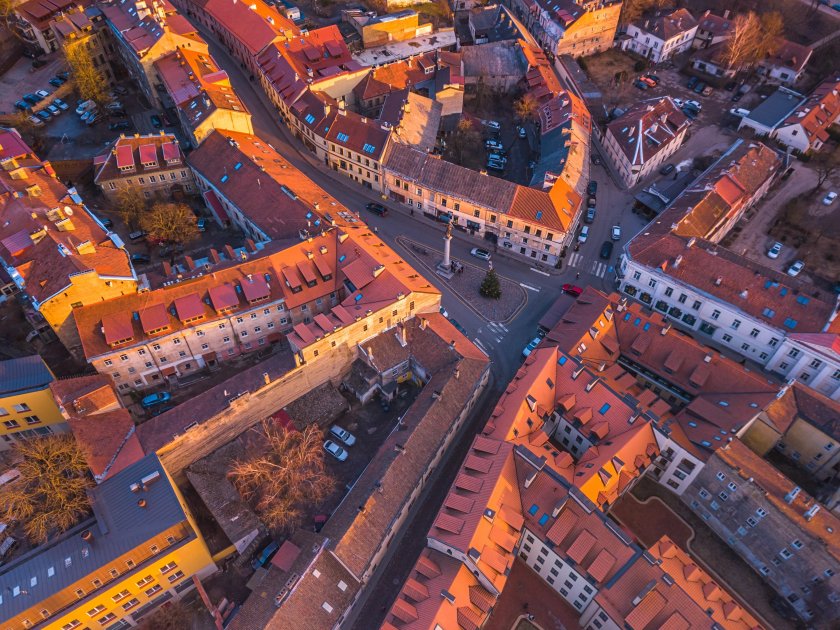
Lithuania's attractions begin with Vilnius Old Town. It is a true historical center, where the special atmosphere of past centuries reigns supreme.

The ancient architecture has been almost completely preserved here. Narrow streets paved with cobblestones and stones suggest the possibility of only walking tours. Among the noteworthy sites are museums, hotel courtyards, educational institutions, and residential buildings. Here you can get acquainted with Gothic architecture and see buildings created in the Renaissance, Art Nouveau, Classicism, and Baroque styles.

Trakai Castle (Trakai)

In the small town of Trakai, the former residence of Lithuanian princes, on an island between two lakes, stands the largest ancient castle in Lithuania, founded in the 14th century.

It is surrounded by a fortress wall crowned with three defensive towers. Together with Trakai Castle, it covers an area of more than two hectares. The construction of the Gothic-style architectural ensemble was completed during the reign of Vytautas.

Today, visitors can see medieval household items, as well as collections on various themes, consisting of items made of mother-of-pearl, ivory, smoking pipes, seals, etc.

Kaunas Castle (Kaunas)

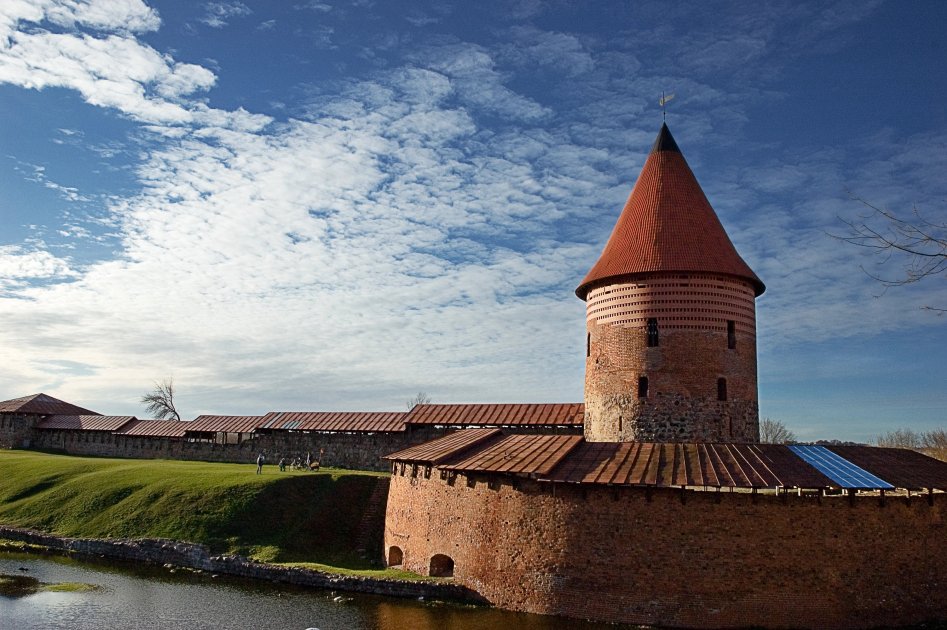
Lithuania has another attraction – Kaunas Castle, built in the Gothic style. Scientists believe that its construction took place in the middle of the 13th century.

The main function of the castle in the past was to protect the territory from the Teutonic Order. Currently, only a third of the castle and two towers remain, and the tiled roof has been restored. The architectural ensemble includes buildings made of red brick. Kaunas Castle hosts monthly festivals, including operettas, and regular theatrical performances featuring knights on horseback.

Gediminas Tower

Want to visit the era of knights and ladies? Visit Gediminas Tower and Castle Hill, the most famous landmarks in Vilnius (you can take the funicular up and down the tower).

Here you can learn about the history of Lithuania, see reconstructions and other exhibits. And what a fascinating view of the city opens up from the observation deck – it's worth seeing with your own eyes!

Curonian Spit

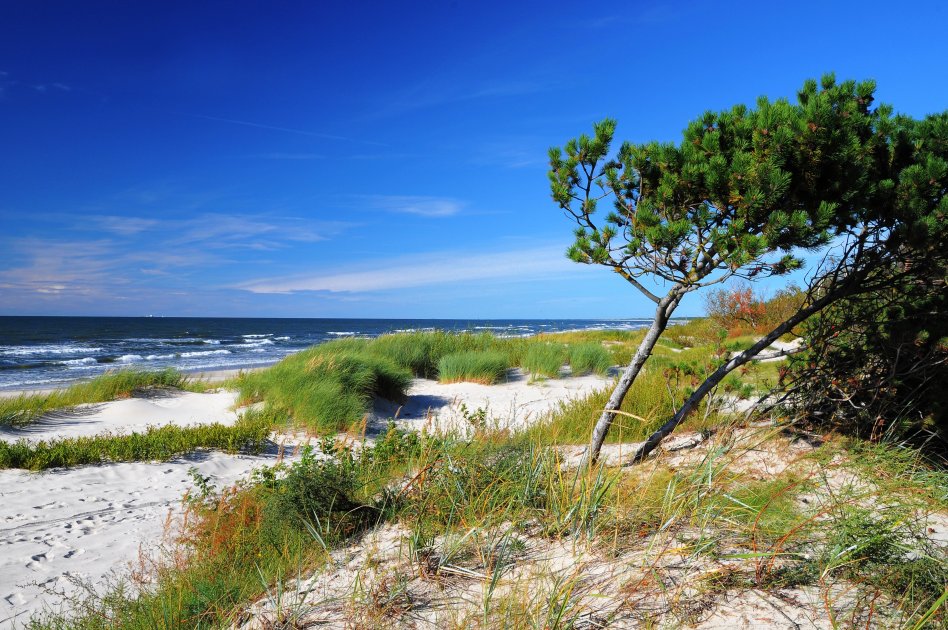
A narrow strip of sandy land, 98 km long, washed by the salty waters of the Baltic Sea on one side and the fresh waters of the Curonian Lagoon on the other.

The spit is included in the UNESCO list of sites, as there is no other natural landscape like it anywhere else in the world. White sandy shores alternate with dense forest. There are excursion routes for tourists to natural and man-made attractions.

You can book a hotel in Lithuania with a discount of up to 65% on the website.

Subscribe to our Telegram channel @tripmydream to be the first to hear about travel news and promotions!

Old Town of Klaipėda

The historic district on the left bank of the Danė River has an atmosphere of antiquity. There are many architectural monuments around the stone-paved Theater Square.

Of particular interest is a complex of architectural structures in an unusual half-timbered style, dedicated to art. One of the symbols of the Old Town is the Stock Exchange Bridge or Charles Bridge. Next to it stands the sailing ship Meridian.

Neris Regional Park

Locals say that the Neris Regional Park has a mystical, mysterious atmosphere. But there is nothing mystical about the fact that visitors to the park see the indescribable beauty of nature with their own eyes.

The park is located in the most picturesque part of the Neris River and protects the unique landscape of the river basin. The park is also home to one of the largest and oldest oak forests in Lithuania, where pagans once worshipped their gods.

And let's not forget about the mythological stones! Not far from the Kernavė road, towards Dukštas, there is a mystical stone with mysterious symbols carved into it, often referred to as runes.

Lukiskis Prison

The prison complex in the center of Vilnius was built at the beginning of the 20th century. For many decades, it served its original purpose, but when the prison was closed, the building was converted into a creative space.

You can explore the prison grounds on a day or night tour or check out one of the many events.

Užutrakis Manor

The Užutrakis Manor in Trakai is one of the main residences of the noble Tyszkiewicz family on the shore of a picturesque lake, opposite Trakai Castle. Józef Tyszkiewicz acquired these lands (600 hectares) in the mid-19th century, and in 1895, an elegant classical palace was built here, which served as a summer residence.

A beautiful park surrounds the palace: interestingly, on one side of the palace, the park is French (i.e., with a geometrically regular layout), and on the other, it is English (i.e., closer to nature). It is very pleasant to walk here in the shade of the trees.

undefined
Photo author - wiki

Kopgalis Fortress – Maritime Museum (Klaipėda)

The fortress was built in the early 19th century to defend the port city of Klaipėda. The fortress's fortifications consisted of a central two-story building where the personnel lived, a defensive moat, and ramparts with casemates.

In 1969, it was decided to establish a maritime museum on the territory of the fort. Currently, the former powder magazine houses a hall dedicated to the history of shipping. Here you can see ships raised from the ship graveyard, fishing boats, and ancient anchors raised from the bottom of the ocean.

The museum has an unusual collection of corals and shells of amazing shapes.

Devil Museum (Kaunas)

This one-of-a-kind museum of devils is located in the center of the Lithuanian city of Kaunas. It was established in 1966 based on the private collection of artist Antanas Žmuidzinavičius, who was famous for his fondness for figurines of fairy-tale creatures. After the artist's death, a memorial museum was founded in his house.

Where else in the world would the cry "Damn you!" be so appropriate? In the museum of evil spirits, you can see a wide variety of figures made of wood, ceramics, and leather. There are more than 3,000 exhibits here.
undefined
Photo author - dvaveka

Hill of Crosses (Siauliai)

Lithuanian landmarks that are local shrines are especially interesting and impressive! For example, the famous Hill of Crosses.

More than 50,000 crosses of various sizes and shapes have been erected on the hill. It vaguely resembles a cemetery, but there are no graves here. The legend explains this accumulation of symbols of faith. It turns out that people who put up a cross on the hill are hoping for success. According to the legend, everyone who puts up a cross on the hill will get this reward.

The atmosphere of this place is amazing, but bright.

St. Anne's Church and St. Bernardine's Church (Vilnius)

Lithuania's attractions include a variety of local shrines. Now we will talk about St. Anne's Church and St. Bernardine's Church.

The architecture of the shrine is striking in its forms and depth of style. Visiting this Lithuanian monument, you can enjoy not only the unique architectural design of the building, but also touch history. The church has an exhibition reflecting the history of the oldest cathedral building, from the time when it was a pagan sanctuary to the present day.

The lower tier of the temple houses the tombs of famous personalities: princes, bishops, and nobles.

undefined
Photo author - govilnius

Lithuanian Folk Life Museum (Rumsikiai)

Among the ethnographic museums in Europe where you can learn about national culture and traditions, the life of peasants and townspeople, the largest is the Lithuanian Open-Air Museum.

It includes more than 183 buildings and 86,000 portable exhibits. The museum covers an area of 175 hectares and is located near the Kaunas Sea.

The exhibition consists of houses and farm buildings from five regions of the Lithuanian state (Dzūkija, Aukštaitija, Suvalkija, Žemaitija, and Lithuania Minor), entire villages from the late 18th to the first half of the 20th century, and a small "Town of Craftsmen" where pots are made from clay and amber is produced. There are also houses and farms, mills and chapels, fences, front gardens, and wells.

Kernov

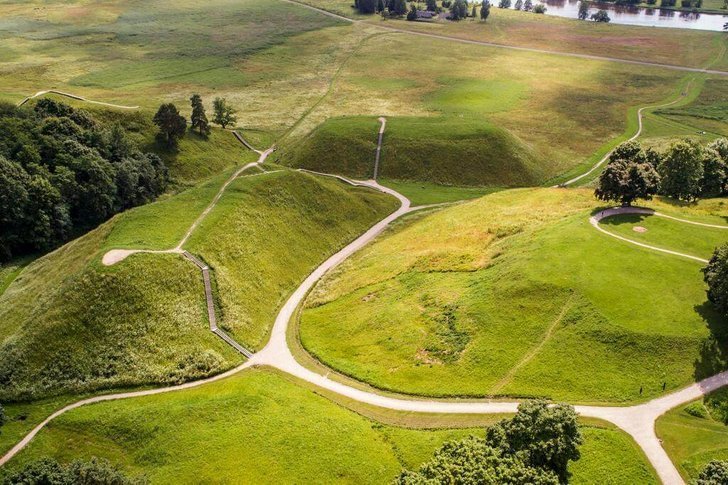
In ancient times, this place was the first capital of Lithuania – a large city with massive fortifications. Currently, about 200 people live among the hills. This historical place is valued by both tourists and UNESCO, which has included Kernavė in the World Heritage List.

Tourists can see the ruins of ancient city buildings and a wooden chapel built without a single nail.

Get travel insurance for trips abroad in just a few clicks!


Хочешь путешествовать чаще?
280 000 подписчиков уже получают наши письма с авиаскидками до -85% и путешествуют чаще. Теперь твоя очередь!
ok
или
Did you like the article?
😍
😂
😄
😐
🤔
😩
SHARE WITH FRIENDS:
No comments
tripmydream - travel service, that helps to find compare and buy best flights and rooms worldwide with the given budget. All necessary information for travelers - is right here!