Old Bergen Museum
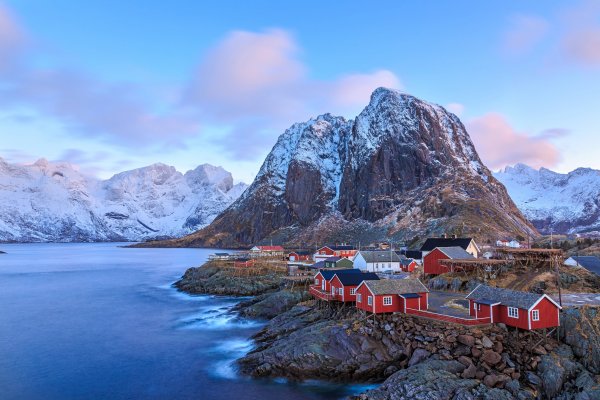
Old Bergen is a city-museum consisting of 50 wooden buildings of different periods of construction (from the end of XVIII to the beginning of XX centuries).
The museum is open all year round, with free admission. However, if you want to appreciate the ancient interiors of wooden houses, you will have to buy an entrance ticket for 50 NOK.
Hanseatic League Museum and Shetstuen
If you like to mix business with pleasure in your travels and explore the historical and cultural background of new countries in depth, head to one of Bergen's unique museums, such as the Hanseatic League Museum and Shetstuen.
The graceful wooden building that houses the museum was built after a fire in the early 18th century and is one of the oldest wooden structures in Bergen. Since 1872, it has housed a museum documenting the 400-year history of the German merchant guild's association with Bergen.
The building is the only one in Bruggen that has retained its original appearance.
Edvard Grieg's House - Trollhaugen
The eminent Norwegian composer Edvard Grieg lived the last 20 years of his life in this picturesque villa on top of a pagorb at Lake Nordås. "Trollhaugen," which translates to "Troll House," was designed by Grieg's cousin Jacques Bull and built in 1885.
When Grieg was in Norway, this is where he spent every summer with his wife, composing plays in this cozy cabin overlooking the lake. In 1985 a small auditorium Troldsalen for 200 seats was built there, and another 10 years later the museum building was supplemented with an exhibition about the life and works of the great composer.
The house itself is now a cozy and lively museum with many personal belongings of the Grieg family.
Bergen Cathedral
The main cathedral of Bergen was once the Christ Church, which stood on the territory of Holmen Castle, but in the 16th century it was destroyed by order of the governor. The only reminder of its existence is a small monument on the site of the altar.
You enter the cathedral and see a small room with beautiful windows, decorated with stone, the walls of which are decorated with portraits of all the bishops of the city since the Reformation. Visitors can see a monument to the poet and bishop Johan Nordal Brun, erected at the expense of King Carl Ehan, a plaque commemorating the royal sailors who died during the Second World War, and an epitaph above the cathedral door depicting a scene from the New Testament.
Against the cathedral wall, to the right, is a memorial to two Bergen poets, Peter Dass and Dorothea Engelbrektsdotter.
KODE Art Museums
In 2013, a group of four cultural sites in Bergen were combined into a common art space called KODE. A single ticket opens the door to any of the four attractions.
KODE 1 houses masterpieces of design and architecture, outstanding Old Master paintings, European and Asian antiques. KODE 2 is a museum of contemporary art. KODE 3 is a concentration of the Golden Age of Norwegian art, adorned with the best paintings by expressionist Edvard Munch and romanticist Johan Christian Dahl. KODE 4 is an art museum, where in addition to the aforementioned Dahl, works by Paul Klee, Picasso and Asger Jorn are also on display.
In short, the concentration of art here is off the charts.
Rosenkrantz Tower in Bergen
Originally, this Norwegian landmark was built as a fortified governor’s residence: at the time, it featured numerous richly decorated chambers, while artillery was positioned on the upper floor of the building. The magnificent wide façade with artillery embrasures faced Bryggen — the picturesque waterfront we mentioned earlier.
For many years, this Bergen landmark faithfully served the city until, like many other structures, it was damaged in the explosion of a ship loaded with ammunition. This occurred in April 1944. Twenty years later, in 1966, the restoration of the tower was completed, and since then it has housed a museum. Climbing the narrow and dark staircase to the very top of the structure, visitors can enjoy views of the sea and the city, rich in beautiful architecture.
Fish Market
Bergen’s Fish Market has long become as much a city landmark as, for example, the Hanseatic Wharf. It is not a market in the traditional sense of the word, where locals shop in the mornings. Rather, it is entirely a tourist destination, much like any urban museum. Organized tour groups are brought here, while independent travelers often drop in spontaneously for lunch.
Norway is a country of seafood. Therefore, we recommend indulging in traditional fish dishes here: the famous Scandinavian creamy salmon soup, mussels prepared right before your eyes, as well as various fillets, tentacles, and claws grilled over an open flame. These are the dishes worth trying at the fish market to truly experience authentic Norwegian seafood cuisine.
You can book a hotel in Bergen with discounts of up to 65% on the website.
Hardangerfjord
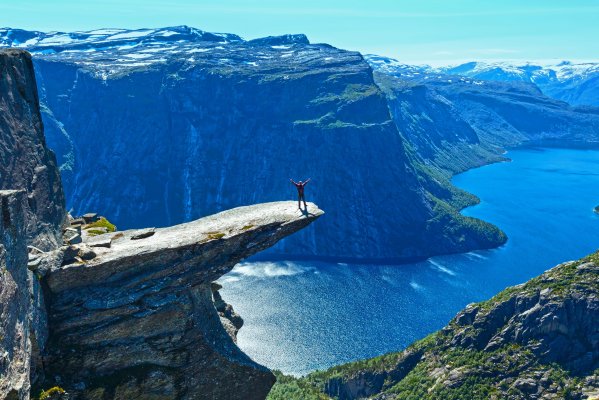
We conclude our selection with exactly what most travelers come to Norway — and Bergen in particular — to experience. Not far from the city lies Norway’s second-longest fjord, which is easily accessible. You will need at least a full day to even begin to appreciate the richness and beauty of this area’s landscapes.
Hardangerfjord is also famous for its unique Norwegian orchards. At the foot of the towering cliffs, lush apple trees spread their branches, while the ground is covered with fragrant wild strawberries. During the season, you can buy apples at a price you are willing to pay and visit Norwegian villages with their distinctive folk character.