Folks, don't forget that we have an extremely comfortable iOS application in App Store
Please try it!

Gradec
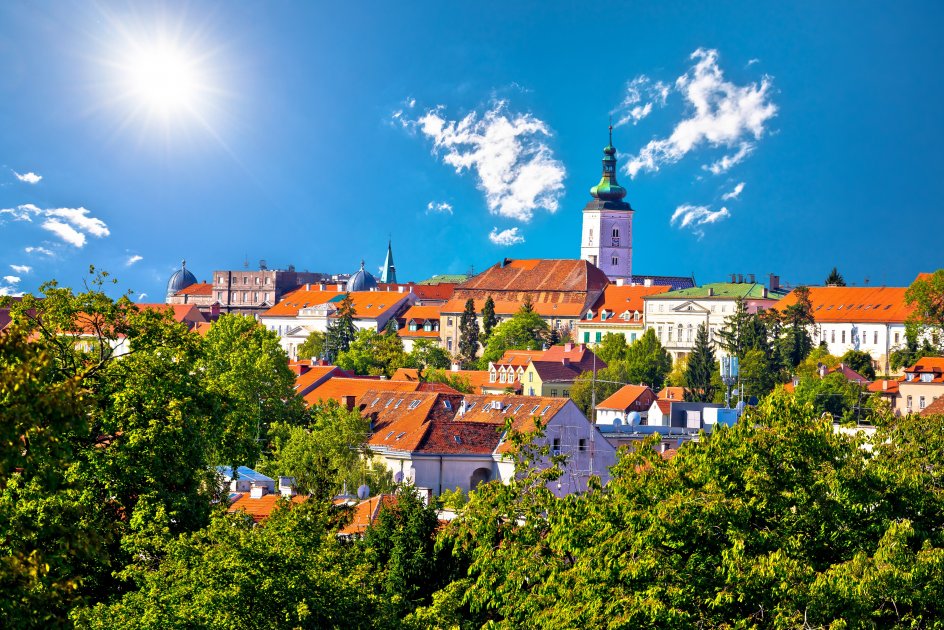
Gradec, situated on a small hill, attracted craftsmen, artisans, and merchants during the Middle Ages. Today it is known as Gornji Grad — one of the main historic districts of Croatia’s capital, Zagreb, which has preserved the atmosphere of the past to this day. Its charming cobblestone streets are perfect for leisurely walks.
The administrative and cultural heart of the district is St. Mark’s Square, named after the nearby church. The square is home to many notable landmarks, including the Croatian Parliament and the Constitutional Court. Radiceva Street leads away from the square; walking uphill along it, you will reach the Stone Gate. In medieval times, this gate served as the main entrance to the city.
 © depositphotos
Read also
Lower Town
The slopes of the hill connect the Upper Town with the Lower Town, which is also considered part of the historical center of Zagreb. When you enter the Lower Town, you will feel its special spirit and free character. Here you will no longer find winding medieval streets: wide avenues and majestic neoclassical buildings will replace them.
The spacious Lower Town is home to most of the most prestigious hotels and museums (which we'll cover below), surrounded by gardens and parks, along with a host of excellent restaurants, cafes, boutiques and large shopping centers.
Maksimir Park
Tired of the bustling center, Zagreb residents and visitors alike head to Maksimirski Park.
Here you can stroll along well-maintained alleys, admire flower beds and spend time by the lakes. The park became an ornament of Zagreb in the XVIII century. There are many historical monuments on its territory: several pavilions, Swiss House, belvedere, as well as sculptures. Part of Maksimir Park is the Botanical Garden, where 1000 plants from different parts of the world grow.
Zagreb Cathedral
Its full name is the Cathedral of the Ascension of the Virgin Mary and Saints Stephen and Vladislav. The construction of one of the most beautiful buildings in Zagreb was started in 1093 and finished almost two centuries later, in 1217. Unfortunately, three decades later the cathedral was destroyed by troops of the Mongol Empire and was rebuilt before the end of the 13th century. Then the building suffered several times from earthquakes and fires.
Its elaborate neo-Gothic spires appeared during the reconstruction after the 1880 earthquake. They are visible from almost any part of the city and are one of its main tourist attractions.
 © depositphotos
Using our website, tripmydream, you can find airline tickets starting from 15 EUR.
Divorce Museum
The Museum of Divorces is opened in a magnificent baroque palace in the Upper Town of Zagreb — the favorite historical part of the Croatian capital.
The unusual institution appeared because of one parting — the life paths of Zagreb artists Olinka Vyshtica and her friend Dražen Grubišić were separated. The couple decided to preserve the memory of the good times by putting together a collection of important items from their love story. And then the collection was supplemented with items from all over the world.
Tkalchichev Street
If you want to have a good meal or sit in a bar and enjoy live music, you need to go to Tkalčićeva Street. This street is just made for entertainment and a visit to it always turns into a few hours of pleasant pastime.
Come along Tkalciceva Street during the day and wander along the sidewalks with colorful low-rise buildings decorated with picturesque balconies, terraces and stores offering souvenirs and other temptations. And after sundown, a legion of restaurants, cafes and nightclubs will offer their services.
Ban Jelačić Square
Road traffic is partially prohibited in this central square of the city, which is a favorite meeting place for its residents and strolls for tourists. "Partially" — the only vehicle to which an exception is made here is the city streetcar.
Although the square still has houses in need of selective restoration, you get a sense of its distinct, edgy character, reflecting the mingling of streams of relaxed tourists with the business meetings of businessmen at dozens of sidewalk cafes.
The square is named after the 19th century ruler Count Josif Jelačić.
Dolac Market
From early morning, local farmers fill the numerous stalls of the Dolac Market with fresh meat, dairy products, fruits and vegetables and many delicious seafood products. The market is also full of artisans offering distinctive Croatian handicrafts and souvenirs.
Locals call it "the belly of Zagreb": it will not only feed everyone who comes here, but also quench your thirst for learning about the Croatian mentality and colorful "market" culture.
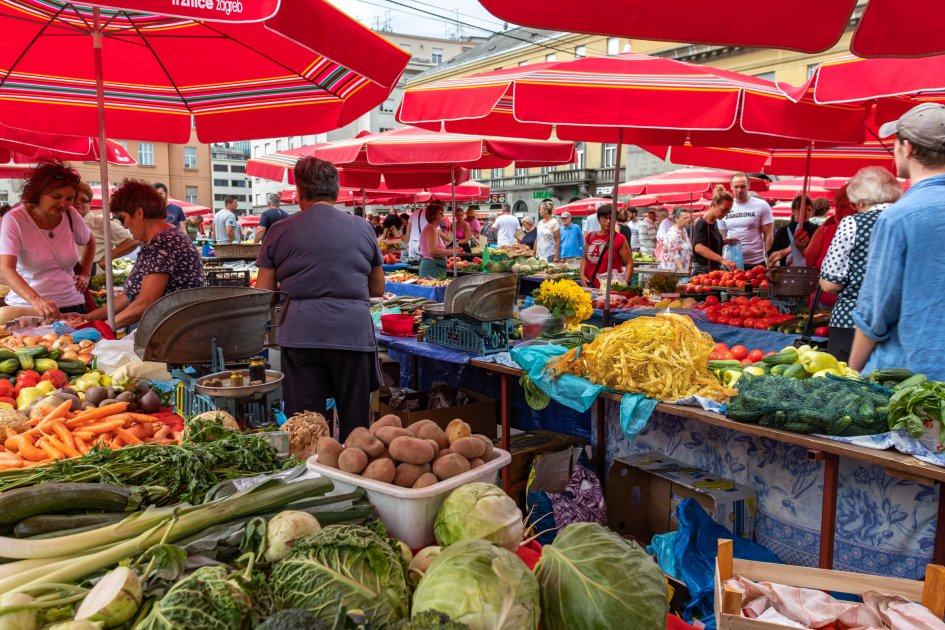 © depositphotos
Archaeological Museum
In Zagreb, you cannot pass by the Archaeological Museum. It is the main repository of artifacts from the entire territory of Croatia. Its collection includes ancient Roman, prehistoric, Greek and medieval exhibits.
The most valuable are considered to be the numismatic collection, Etruscan objects (including the only surviving linen books from the ancient world) and the weapons collection.
Stone Gate
The only surviving medieval fortress wall. In the 13th century it protected the Upper Town, then called Hradec, from attack, as we have already told you above.
In 1790 there was a great fire, after which the icon of the Virgin Mary, which hung at the entrance to the town, miraculously survived. Now there is a small chapel inside the Stone Gate, where you can see this Christian relic, place a candle or simply take in the silence and atmosphere of peace.
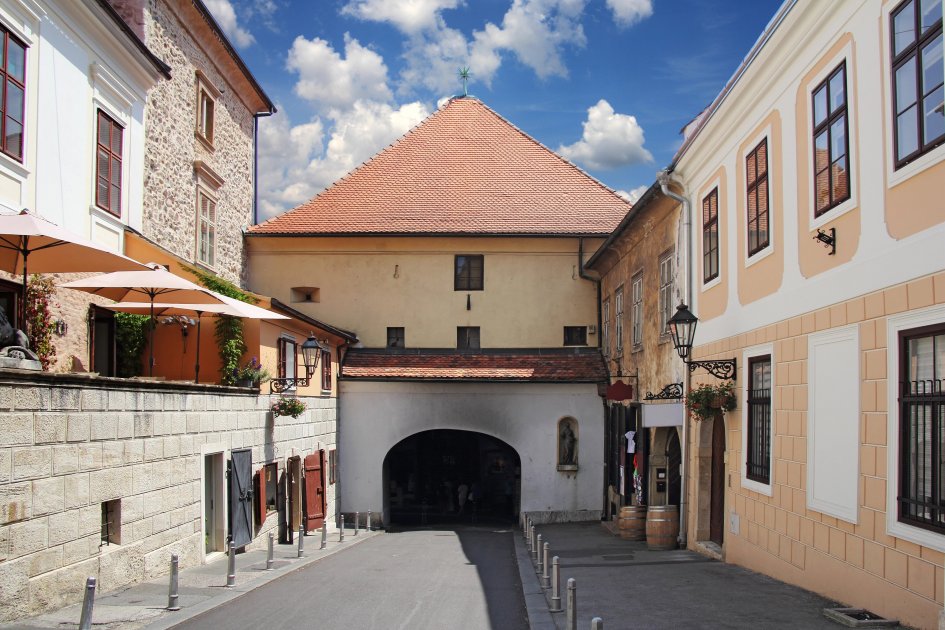 © depositphotos
Read also
Mirogoj Cemetery
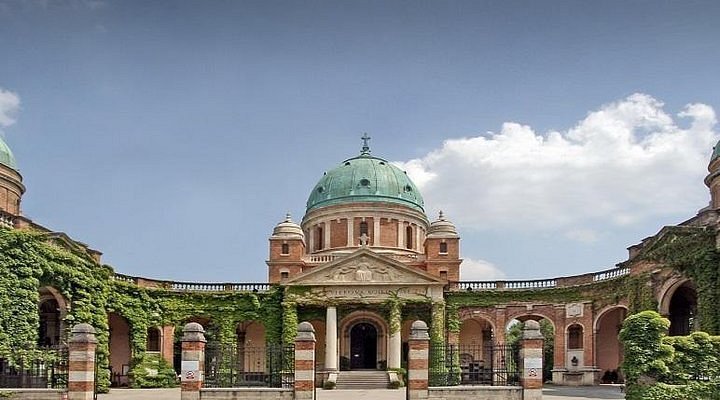
This cemetery is located on a hill near the historical center of the city and is considered one of the most picturesque in Europe.
The graceful entrance gate with its neoclassical colonnade is covered with wild grapes, and the tombstones bear the names of famous Croatian figures of science, art, culture, politics and sports.
Despite the title of one of the most beautiful cemetery parks, Mirogoj has been among the endangered cultural heritage sites on the list of the Europa Nostra organization for several years. That is why seeing it is a great success.
Strosmeier Gallery
Was founded by Croatian bishop Joseph Strosmeier in 1884. Another name of this museum is the Gallery of Old Masters.
The bishop was an ardent collector and for several decades collected paintings, which he later donated to the city.
Initially, the collection was based on paintings by Florentine and Venetian Renaissance artists. Currently, the museum offers works by Flemish, German, Dutch and French painters of the XIV-XIX centuries.
Of special value is the "Baszczanska Plate" — a stone manuscript of the XI-XII century. It is one of the oldest sights in the world, written using Glagolitic script — the first Slavic alphabet.
Medvednitsa Mountain
Medvednica has always been a symbol of Zagreb, its defense against invaders and cold northern winds.
The mountain massif is a favorite resting place for locals, the slopes covered with beech forests are a real repository from the city noise. Medvednica is densely covered with trails, mountaineering lodges and historical sights, in fact playing the role of a country park in a wild setting.
Mimara Museum
The Mimara Museum is named after its founder, the renowned Croatian art collector Ante Mimara, who spent most of his life in Austria before returning to his native Zagreb in his later years. In the 1980s, he decided to donate a large part of his extensive collection to the city, which was housed in a grand building specially designated for this purpose.
The museum’s picture gallery displays around 4,000 paintings, including many famous works by Canaletto, Rubens, Holbein, Velázquez, Goya, Monet, Renoir, and Degas. The exhibition halls also feature unique historical artifacts from nearly all five continents, including antique tableware and icons.
Lenuci’s Horseshoe Park Complex
If you momentarily forget that you are in the former Austro-Hungarian Empire, Lenuci’s Horseshoe will quickly remind you of it. In the 19th century, urban planner Milan Lenuci envisioned organizing the green areas of the Lower Town so that parks and squares would flow seamlessly into one another, forming the shape of a horseshoe.
Inspired by similar urban concepts in other European cities, Lenuci sought to emphasize the vast open spaces of the Lower Town and its majestic architecture. Although the project was only partially realized and the horseshoe was never fully completed, it resulted in a beautiful botanical ensemble with over 10,000 plant species and several garden squares, such as Zrinjevac and Tito Square.
Take out insurance for traveling abroad in a couple of clicks!
Read also