Flights

The World's Largest Airports: Top 10 by Passenger Volume and Area

A comprehensive ranking of the world’s largest airports by passenger volume and physical area. Atlanta, Dubai, Shanghai, and other major aviation hubs, with up-to-date statistics for 2024–2025.
20 september 2026
AUTHOR: Kateryna Lindt
0
6 min

Folks, don't forget that we have an extremely comfortable iOS application in App Store

Please try it!

Kateryna Lindt
I write routes the way I would advise a friend before a trip - nothing superfluous, just proven and at a comfortable pace.

If you fly often or are simply interested in aviation, it’s useful to know which airports handle the most passengers and cover the largest area on the ground. In 2024, global air travel carried more than 9.4 billion passengers, and the leaders in these statistics reveal a great deal about global air traffic patterns.

The world’s largest airports are interesting from various perspectives. Some impress with their passenger numbers, while others stand out for their vast land area. Sometimes these two factors overlap, but often they do not: the airport with the largest area is not necessarily the busiest. In this article, we’ll examine both scenarios and show how they differ.

The Busiest Airports: Top 10 by Passenger Volume

Airport rankings by passenger volume provide a real-time snapshot of the global aviation industry. The leaders are determined by the total number of travelers (domestic and international flights combined) in 2024, according to Airports Council International (ACI World).

Rank

Airport

City / Country

Passengers in 2024 (millions)

1

Hartsfield–Jackson Atlanta International (ATL)

Atlanta, USA

108.07

2

Dubai International (DXB)

Dubai, UAE

~94.0

3

Dallas Fort Worth International (DFW)

Dallas, USA

87.81

4

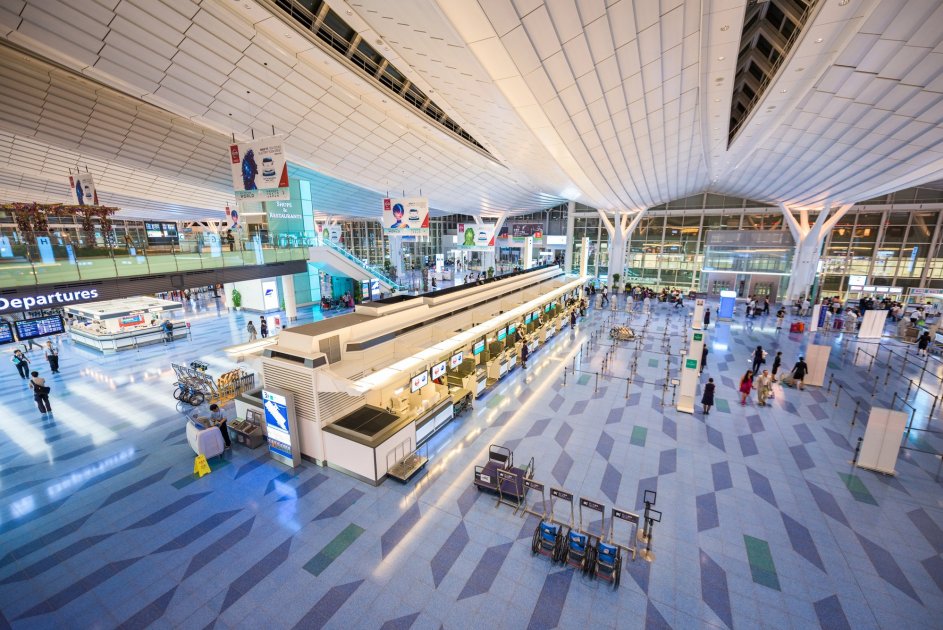
Tokyo Haneda (HND)

Tokyo, Japan

85.9

5

London Heathrow (LHR)

London, United Kingdom

83.88

6

Istanbul Airport (IST)

Istanbul, Turkey

>80

7

Indira Gandhi International (DEL)

Delhi, India

77.8

8

Shanghai Pudong International (PVG)

Shanghai, China

~75

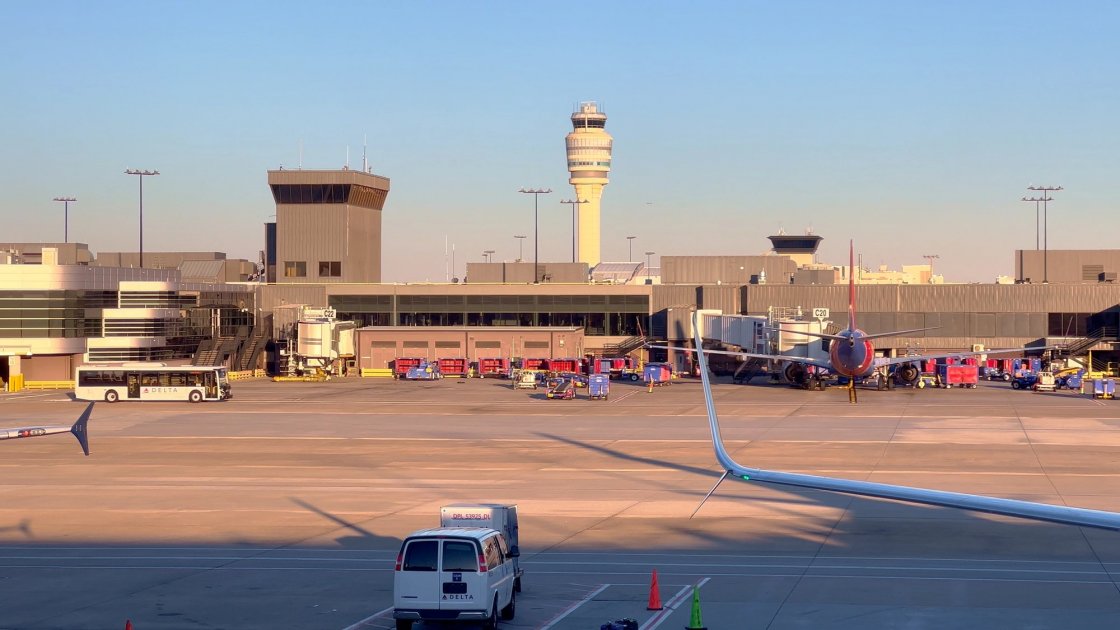
Atlanta Airport has held the title of the world’s busiest for many years in a row. This is no coincidence: Atlanta is the main hub for Delta Air Lines, and the city serves as a crossroads for routes spanning the entire United States and connecting the U.S. with international destinations.

Dubai Airport deserves special attention. It leads in the number of international passengers (92.33 million in 2024) because Dubai is a key transit hub between Europe, Asia, and Africa. If you’re flying from Ukraine to Southeast Asia with a layover, there’s a good chance your flight will go through DXB.

Shanghai’s PVG Airport made a significant leap in the rankings in 2024—rising from a lower-tier position to 8th place in the global top 10, with traffic increasing by 41%. This reflects the recovery of air travel in China following the pandemic and growing demand for air travel in the region.

The Busiest Airports for International Flights

If you’re interested not in all passengers, but only in those traveling between countries, the picture changes. Airports with heavy domestic traffic (such as Atlanta) lose ground to international hubs.

Rank

Airport

City / Country

International Passengers in 2024

1

Dubai International (DXB)

Dubai, UAE

92.33 million

2

London Heathrow (LHR)

London, United Kingdom

79.19 million

3

Incheon (ICN)

Seoul, South Korea

70.67 million

4

Singapore Changi (SIN)

Singapore

67.06 million

5

Amsterdam Schiphol (AMS)

Amsterdam, Netherlands

66.82 million

Dubai remains at the top in terms of international traffic as well, posting a 6.1% increase over the year. London Heathrow, despite recent restrictions on expansion, remains in the top two and served passengers with a 5.7% increase.

Asian and European airports dominate the list of international traffic. This is because they are at the center of densely connected air networks, where nearly every flight involves a connection between countries and continents.

The Largest Airports by Land Area

Now let’s move on to the second interpretation of the phrase “largest.” If we look at the physical size of the territory rather than the number of passengers, the ranking changes dramatically. Some airports that are enormous in terms of land area serve relatively few passengers.

The airport in Saudi Arabia ranks first in terms of area:

  • King Fahd International Airport (DMM) in Dammam, Saudi Arabia, covers approximately 776 square kilometers. That’s roughly the size of five New York City boroughs. The airport opened in 1999 on the site of a former U.S. military base. But note: of those 776 km², only about 37 km² are actually in use. The rest of the territory is reserved for future expansion.
  • Denver International Airport (DEN) in Denver, USA—about 135.7 square kilometers—is the second-largest in the world. This vast area handled 82.4 million passengers in 2024 (a 5.8% increase). It is home to the longest runway in North America for civilian use—4,877 meters.
  • Dallas Fort Worth International (DFW) in Dallas, U.S.—about 69.6 square kilometers, roughly the size of Manhattan.
  • King Khalid International Airport in Riyadh, Saudi Arabia—375 square kilometers.
  • Kuala Lumpur International (KUL) in Malaysia — about 100 square kilometers.
  • Beijing Daxing International (PKX) in Beijing, China—47 square kilometers. Despite its compact size, it is one of the most impressive airports in the world. It is home to the world’s largest single-story terminal building, covering an area of about 700,000 square meters and shaped like a starfish.

It’s important to understand that an airport’s area and its passenger volume are almost independent factors. King Fahd covers nearly 800 km², but serves a relatively modest number of passengers. In contrast, Atlanta, which serves 108 million people a year, ranks modestly in terms of area on the global scale.

Other Major Airports and Their Distinctive Features

In addition to passenger terminals, there are airports that stand out for other reasons. Hong Kong International Airport (HKG) is a leader in cargo transportation, handling tons of goods daily. Chicago O'Hare (ORD) leads in the number of aircraft movements (takeoffs and landings), which reflects its high air traffic density.

Istanbul Airport in Turkey has shown one of the most impressive growth rates: traffic increased by 53.4% compared to 2019. This reflects Turkey’s increased importance as a transit hub and the growing demand for travel in the region.

If you’re planning a business trip or a vacation itinerary with layovers, it’s helpful to know which airport has become the main hub in the region you’re interested in. This will allow you to better plan your schedule and choose convenient connections.

FAQ

Which airport is the largest in the world?

By land area—King Fahd International in Saudi Arabia (776 km²). By passenger volume—Hartsfield–Jackson Atlanta International in the U.S. (108 million passengers in 2024). These are two different rankings.

Why is the airport in Atlanta so busy?

Atlanta is the main hub for Delta Air Lines, one of the largest U.S. carriers, and is located at a geographical center that’s convenient for routes throughout the country. This generates a huge volume of both domestic and international flights.

Which airport is the busiest for international flights?

Dubai International—it handled 92.33 million international passengers in 2024. Dubai is a key transit hub connecting three continents.

Which airport is the largest in the U.S. by area?

Denver International (135.7 km²), the second-largest in the world by area. Despite its enormous size, it served 82.4 million passengers in 2024.

Why did Shanghai Pudong jump in the rankings?

Shanghai Airport grew by 41% in 2024 due to the recovery of air travel in China following previous restrictions and growing demand on Asian routes. The growth was so significant that the airport entered the global top 10.

Conclusion

The world’s largest airports are not just an interesting fact from aviation statistics, but also an indicator of global economic and demographic trends. Atlanta dominates in passenger traffic thanks to the size of the U.S. market and the city’s role as an aviation hub. Dubai leads in international traffic due to its strategic location. Shanghai is growing rapidly in tandem with Asia’s economic development.

If you travel frequently or are interested in aviation, keep in mind: the busiest airport isn’t always the largest in terms of area. When choosing a route with layovers, it’s helpful to know how these hubs operate and which ones are best suited for convenient layover times and quick transfers.

Хочешь путешествовать чаще?
280 000 подписчиков уже получают наши письма с авиаскидками до -85% и путешествуют чаще. Теперь твоя очередь!
ok
или
Did you like the article?
😍
😂
😄
😐
🤔
😩
SHARE WITH FRIENDS:
No comments
tripmydream - travel service, that helps to find compare and buy best flights and rooms worldwide with the given budget. All necessary information for travelers - is right here!