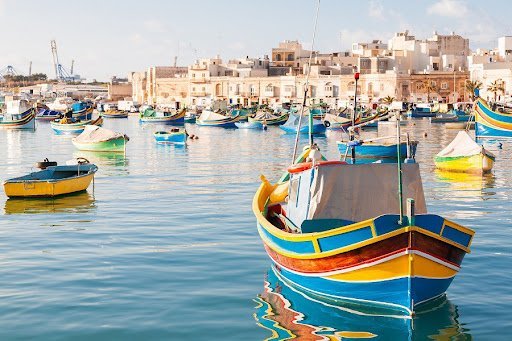
You can start your promenade at Place Balutta (formally St. Julian's). Its landmark is a long ornate Art Nouveau structure with three figurative passages. It looks interesting, but strange. It looks as if it was carried somewhere to Brussels or Vienna, but lost on the way. Under the feet of the building is a bay with a beach slightly larger than an inflatable swimming pool. The other end of the promenade is crowned by the Point shopping mall with a full set of all European brands. There are the same in Kiev TSUM. Therefore, not reaching the mole, you can safely turn to the ferry crossing, connecting Sliema with Valletta. It is from this side that the Maltese capital turns its most photogenic profile to the guests. You have 15 minutes to take the best pictures of Valletta, which is about how long the ferry boat is on the way. The main thing is to take a comfortable position on the top deck. The cost of a photo session, i.e. a ticket for one trip, is 1.5 euros.
Restaurant life in Sliema is subject to the laws of the big city. That's why everything here is slightly more expensive than average, and more standard than soulful. Only U Bistrot in the mentioned Balutta Bay can be recommended, more for its lovely sea view than for its cuisine. Well, and they are not as overpriced as their competitors.
5 interesting things to see in Malta:
1. Order of Malta
Knights in Malta have not gone anywhere. They've only changed a bit, swapping out their ringlets for suits. But the Order of Malta still exists. And although today its headquarters are in Rome, it remains quite influential in its historic cradle. Take a look at the knight's residence in Valletta, in the Place Jean De Valletta (First Master). Such an impregnable bunker could withstand a nuclear attack. The activities of the Order of Malta ovita a certain veil of mystery. Someone considers them patrons of the arts, some are Freemasons. But for tourists - it is mainly a variety of souvenirs and costume shows. The most lavish is the In Guardia parade, which traditionally takes place in June.
2. Festas
In addition to knightly, colorful religious processions - festas - are also very popular in Malta. You would think that life on the islands is a holiday. Every weekend, or even on weekdays, in some Maltese village there is a festa. The action is dedicated either to a local or global saint, and the preparation for it for a week or two becomes the chamber tone of the whole city life.
A few days before the start of the celebration, big men drag weighty 3-meter figures around the central square, hang flags and illumination, argue and go to the pub to make peace - in general, not to sit at home. And when all the entourage is ready, the thousandth procession with the largest sculpture at the head, orchestra and choir rolls out onto the streets. It all ends with copious refreshments and fireworks. For an exact list of all major knights' parades and festivals by date and item, see the calendar here.
3. Balconies
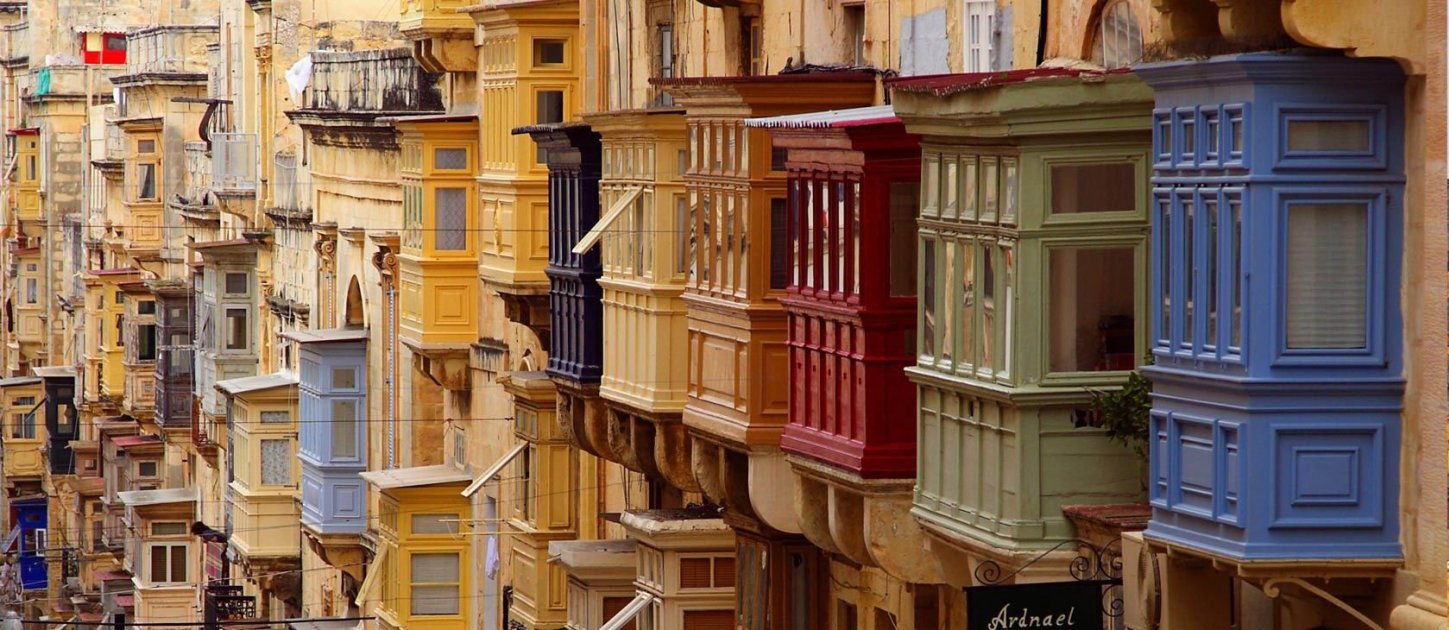
If the Maltese could, they would start building a house with a balcony. That's where they would end up. Even outright shacks often have shapely loggias jutting out in front of them. Balconies define the architectural image of Valletta (in other cities this exuberance is a little more restrained). They cling to the houses like swallows' nests. They stretch along the streets like necklaces. You want to sing serenades under them all southern night long. But in Mdina, doorknobs are worshipped with almost the same fervor. Some are the size of frying pans. And each one is an installation in metal.