Travel Ideas

Barcelona: What to see in 1 day

Barcelona is a city that falls in love at first sight. Gaudi architecture, gothic streets, sea breeze and cozy tapas bars create an atmosphere that you want to soak up even in a short visit. If you only have 1 day, it's no reason to postpone your trip. The main thing is to think about your itinerary to see the best without rushing.
11 july 2025
AUTHOR: Kateryna Lindt
0
11 min

Folks, don't forget that we have an extremely comfortable iOS application in App Store

Please try it!

Kateryna Lindt
I write routes the way I would advise a friend before a trip - nothing superfluous, just proven and at a comfortable pace.

General itinerary and time management

Your goal is to see the key points of the city without rushing. We start at 9:00 from the center - and finish in the evening in El Born or by the sea.

  • 09:00-10:00 - Plaza Catalunya and the start of the Rambla walking tour
  • 10:00-11:00 - Boqueria Market + Gothic Quarter
  • 11:00-12:30 - Barcelona Cathedral + St. Eulalia Square
  • 12:30-14:00 - El Born: Picasso Museum, Café
  • 14:00-15:00 - Tapas/Paella Lunch
  • 15:00-17:00 - Sagrada Familia (ticketed admission)
  • 17:00-18:30 - Gaudi Houses (Casa Batlló, La Pedrera)
  • 18:30-19:30 - Walk along Passeig de Gràcia
  • 19:30-22:00 - Dinner and evening walk: Barceloneta / Montjuïc

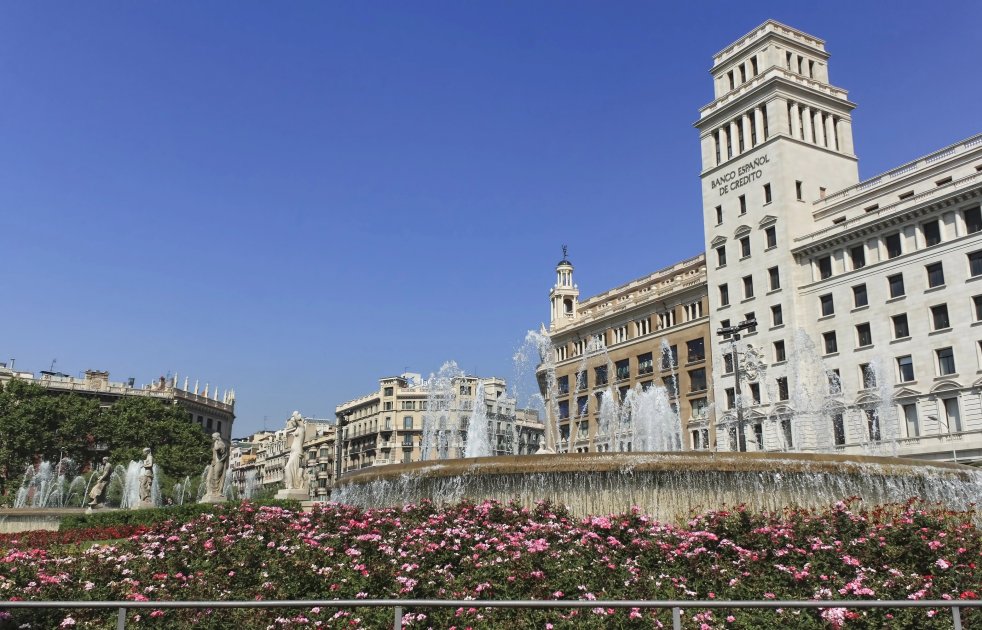
09:00 - Plaça de Catalunya (Catalonia Square)

Plaça de Catalunya is Barcelona's main square, located at the junction of the old city (Gothic Quarter, Rambla) and the newer Eixample district. Its area is about 50,000 square meters. Here meet the main transportation lines of the city: metro, buses, Aerobus from the airport, tourist buses.

It was laid at the end of the XIX century, when the city walls were demolished to unite the old Barcelona with the new Eixample district.
It became a symbol of the unification of the old and new city, as well as the economic growth of Catalonia.
Decorated by famous Catalan architects, it is decorated with fountains and sculptures by famous artists of the 20th century.

What is special here?

  • Beautiful fountains and sculptures, though especially impressive in the evening illumination.
  • A huge number of pigeons is a trademark of the square, just like in St. Mark's Square in Venice.
  • Barcelona's main shopping streets, Passeig de Gràcia and Portal de l'Angel, leave from here.

Why start your route from here?

  • Convenient transportation: it's easy to get here from anywhere in the city and the airport.
  • Central point of the city: it's a logical startingpoint for a route down La Rambla to the sea or up to Gaudi's houses and the Sagrada.
  • The atmosphere of Barcelona from the first moment: noise, street musicians, hurrying citizens, tourists with maps - all this immerses you in the life of the Catalan capital from the first second.
  • A quick bite to eat or a coffee in one of the many cafés around the square before starting a busy day.

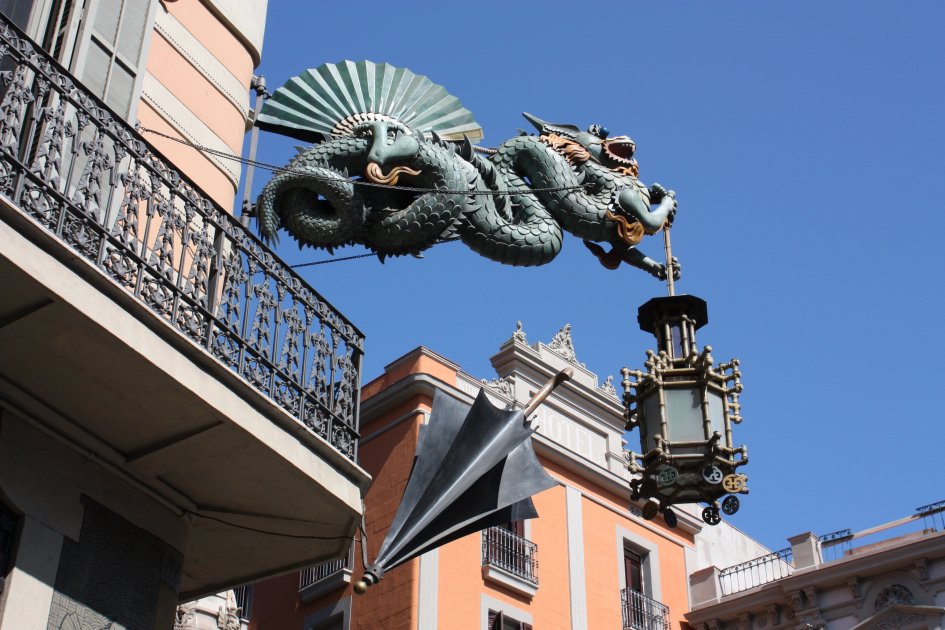
09:30 - Walk along La Rambla (La Rambla)

Barcelona's main pedestrian street, stretching 1.2 km from the Plaça de Catalunya to the Columbus Monument by the sea. It is considered the heart of the city.

It emerged on the site of a former riverbed in the Middle Ages, gradually turning into a marketplace and a promenade.
In the XIX century theaters, hotels, cafes appeared here, turning La Rambla into the center of city life.

But beware of pickpockets - it is on the Rambla that they are the most numerous.

Why visit?

  • To experience the real Barcelona: street musicians, living statues, artists and an endless stream of tourists and locals.
  • See Juan Miró's famous mosaics right in the sidewalk.
  • Enjoy the atmosphere of freedom, creativity and Mediterranean energy.

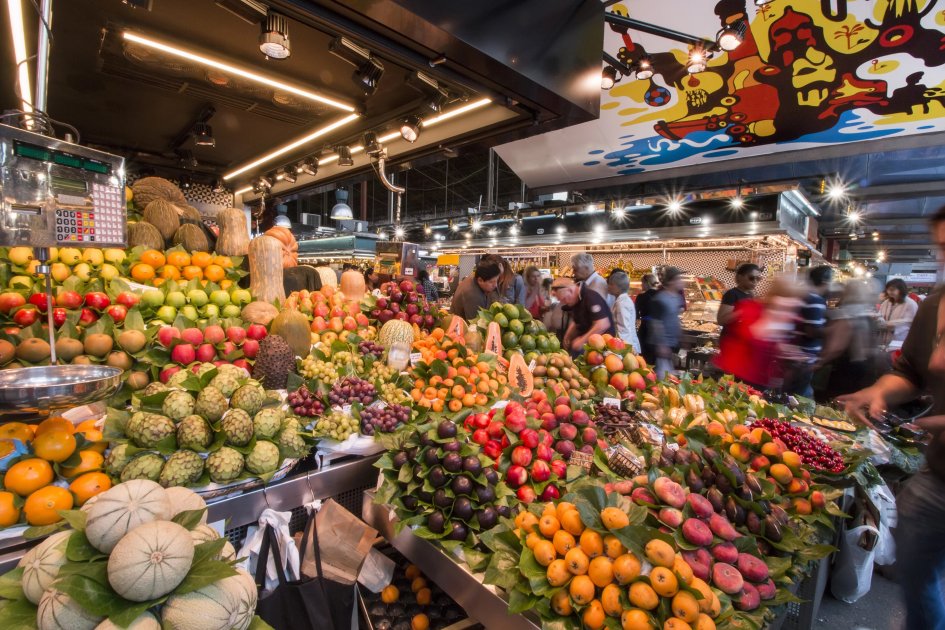
10:00 - Boqueria Market (Mercat de la Boqueria)

The largest and most famous market of the city, it has existed since the XIII century. It sells fruits, seafood, cheeses, jamon, sweets and Catalan cuisine.

Initially, trade was conducted in the open air right on the Rambla.
In the 1840s a covered pavilion was built, which has been rebuilt several times and is now a modern gastronomic space.

Why visit.

  • To try local specialties: fresh oysters, jamon, calamari, juices.
  • See what gastronomic Barcelona is all about.
  • A great opportunity to grab a quick tapas bite without wasting time at a full restaurant.
    Try a freshly squeezed juice (from €1),
    Tapas with anchovies or calamari (from €3-5).

Address: La Rambla, 91, 08001 Barcelona

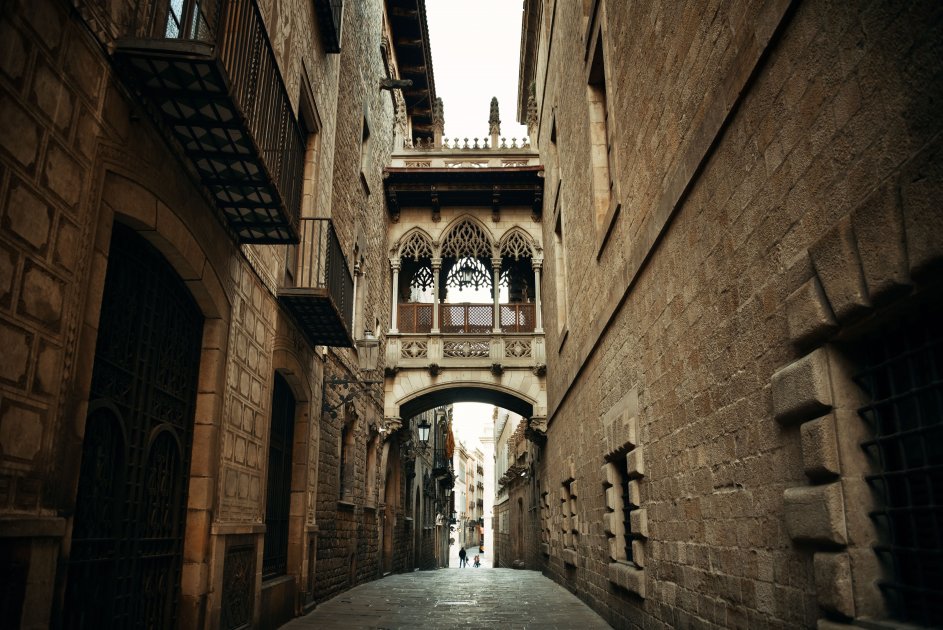
10:30 - Gothic Quarter (Barri Gòtic)

An ancient neighborhood of Barcelona with narrow streets, squares, Gothic buildings and remains of Roman walls.

The ancient Roman city of Barcino was located here.
In the Middle Ages, the quarter became a political and religious center.
It still retains the spirit of medieval Catalonia.

Why visit?

  • To feel the atmosphere of the European Middle Ages.
  • See the Royal Square, the cathedral and many historic houses.
  • Take atmospheric photos in the narrow streets and courtyards with orange trees.

You can book a hotel in Barcelona with a discount of up to -65% on the website.

11:00 - Cathedral of the Holy Cross and St. Eulalia (La Catedral de Barcelona)

Barcelona's main Gothic cathedral, built in honor of the city's patron saint, Saint Eulalia. It was built between the 13th and 15th centuries.

According to legend, St. Eulalia, a 13-year-old Christian martyr, was rolled naked through the streets of the city by the Romans, but a sudden snowfall covered her body.

Why visit?

  • The majestic Gothic architecture.
  • The opportunity to climb to the roof and admire the view of the city.
  • Quiet patio with geese, a symbol of Eulalia's purity.
  • Tickets:

  • Entrance to the cathedral is free during service hours, climb to the roof ≈ €7
  • Tickets can be purchased here
  • Official website
  • Address: Pla de la Seu, s/n, 08002 Barcelona.
undefined
Photo author - barcelonatm

12:30 - El Born

A creative and bohemian neighborhood with cozy bars, designer stores and the Picasso Museum. Formerly a neighborhood of artisans and guilds. Now known for its old town atmosphere, art galleries and nightlife.

Why visit.

  • To see Barcelona without the touristy hustle and bustle of the Rambla.
  • Visit the Picasso Museum with the largest collection of his early works.

Gastronomy: Check out the historic El Xampanyet bar - try cava (Catalan sparkling wine) and tapas.

14:00 - Lunch

Recommendations:

  • Tapeo Born - traditional tapas, average check €15-20
  • Cal Pep - famous Barcelona tapas bar legend (better to book)

Subscribe to our telegram channel @tripmydream to be the first to hear travel news and promotions!

15:00 - La Sagrada Familia (La Sagrada Familia)

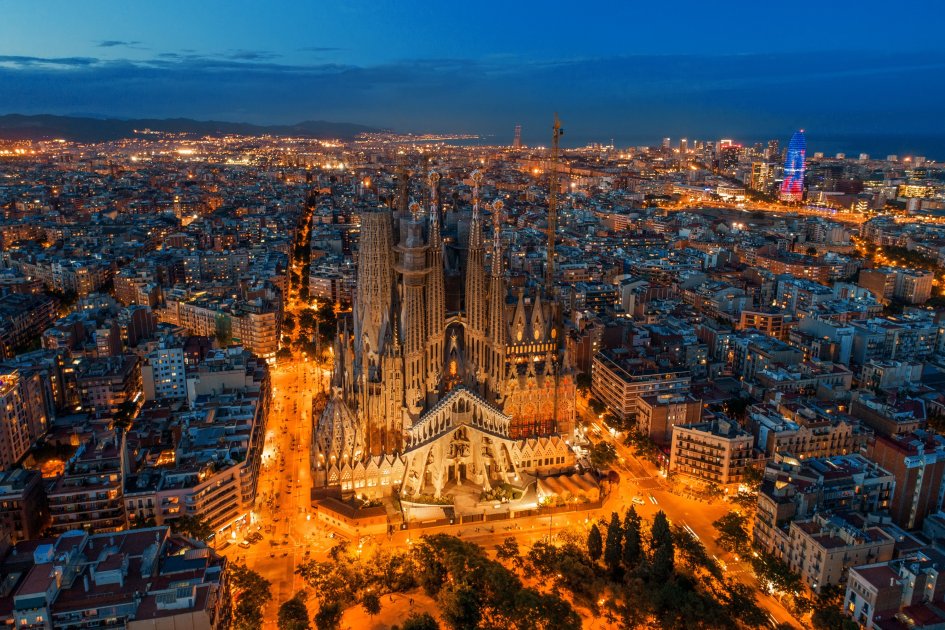
La Sagrada Familia is the Great Temple of the Holy Family, Antoni Gaudí's greatest creation, the main symbol of Barcelona and one of the most famous architectural creations in the world. The Art Nouveau and Neo-Gothic temple, built over 140 years, is striking in its form, scale and philosophical depth.

Construction began in 1882 under the direction of architect Francisco del Villar, but a year later the project was headed by Antoni Gaudi. Gaudi completely overhauled the project, turning it into his greatest life's work. He devoted the last 40 years of his life to the Sagrada, living near the construction site. After Gaudi's death in 1926, construction continued and is scheduled to be completed by 2026-2030 (although the timeline may shift).

What's special about the architecture?

  • The temple combines neo-Gothic style and Catalan Art Nouveau.
  • Gaudi's main idea is to reflect nature in the architecture: the columns inside resemble tree trunks, branching upwards and creating the feeling of a forest.
  • The stained glass windows are arranged so that the light creates a "fairy-tale forest" effect inside with soft shimmers.
  • The facades symbolize the most important events of the Bible: Christmas, the Passion of Christ and the Glory of the Lord (the latter is still under construction).

Interesting facts

  • The height of the central tower after completion of construction will reach 172.5 meters, which will make it the tallest temple in Europe.
  • Gaudi deliberately made the height lower than the Montjuïc mountain, so that the creation of man would not surpass the creation of God.
  • The temple will have 18 towers, each symbolizing Jesus, the Virgin Mary, the Apostles and the Evangelists.
  • Gaudi is buried in the crypt of the Sagrada Familia.

Why it's worth a visit.

  • It's not just a temple, but an architectural revelation that combines art, math, religion and nature.
  • See the play of light inside as the sun's rays pass through the colored stained glass windows, creating an atmosphere of absolute peace.
  • Experience Gaudi's genius and understand why Barcelona is proud of this project as a cultural and spiritual heritage.

Tickets are sold online only due to overwhelming demand, priced from €26. Options with audio guide and climbing the towers are available (recommended).

Address: Carrer de Mallorca, 401, 08013 Barcelona

17:00 - Walk along Passeig de Gràcia and Gaudi's houses

Passeig de Gràcia is Barcelona's main and most prestigious street. It connects Plaza Catalunya to the Gracia neighborhood, runs through the Eixample and is known for its luxurious architecture, world-class boutiques and two of Gaudi's iconic houses, Casa Batlló and La Pedrera (Casa Mila).

The street appeared in the XIX century as a road connecting Barcelona with the then separate town of Gracia. In the late 19th and early 20th centuries, during the heyday of Catalan modernism, Passeig de Gràcia was the site of the richest houses in the most daring architectural styles.

This is not just a street of stores - it is an open-air museum of architecture, where modernism is revealed in all its glory. It is home to some of Barcelona's most prestigious hotels and boutiques such as Chanel, Louis Vuitton and Prada. It is also a great place for a stroll in the evening, when the houses are beautifully illuminated and the street is full of life.

undefined
Photo author - batllo

Casa Batlló

The house was rebuilt by Antoni Gaudí in 1904-1906 for textile magnate Josep Batlló. The facade is decorated with multicolored mosaics (trencadis technique), creating the effect of dragon scales. The roof of the house is wave-shaped and symbolizes the back of the mythical dragon St. George - the patron saint of Catalonia.

What's special about the inside?

  • The absence of right angles.
  • Stained glass windows, staircases and doors with unusual shapes.
  • Courtyards with mosaics in shades of blue, creating the effect of light on the deep sea.
  • Climbing to the roof, you can see the "dragon's backbone" and fireplaces of unusual shapes.

Why it is worth a visit?

  • This is one of Gaudi's most colorful and "fairy-tale" creations.
  • Each room is like a shot from a fantasy movie, where you feel yourself inside a magical world.
  • A great opportunity to understand Gaudi's philosophy: the harmony of architecture with nature and mythology.

It is better to buy tickets online in advance. Price: from €29
Address: Passeig de Gràcia, 43, 08007 Barcelona

La Pedrera (Casa Milà)

Built by Gaudí between 1906 and 1912 for the Milà family. Nicknamed "La Pedrera" - "the quarry" for its undulating façade of light-colored limestone, which resembles rock.

What's special inside?

  • Apartments with unique layouts with no load-bearing walls, which allowed for large open spaces.
  • A courtyard-atrium with stained glass windows that create an impressive play of light.
  • Roof terrace with "warrior helmets" - unusual ventilation towers and chimneys that seem like living sculptures.

Why visit

  • To experience Gaudi's revolutionary engineering that was ahead of its time.
  • Climb to the roof and see Barcelona from a unique perspective amidst fantastic sculptures.
  • Understand why Casa Milà is considered a masterpiece of functional architecture and organic design.

Tickets are best booked online. Price: from €25
Address: Passeig de Gràcia, 92, 08008 Barcelona

19:00 - Evening Barcelona

Options:

  1. Dinner at El Born or Barceloneta.
  2. Walk around Barceloneta, the old fishermen's quarter and the city's best beach.
  3. Climb to Montjuïc, a hill with a fortress, gardens and views of the whole city.

Barceloneta is a neighborhood and beach in Barcelona near the port and the old town. It was originally a fishermen's quarter, built in the 18th century for residents displaced from the Ribera neighborhood, on the site of which the Citadel fortress was built. Barceloneta Beach is Barcelona's most famous urban beach, about 1.1 km long, with golden sand and a promenade for strolling. It has narrow streets, old houses, the best cafes and restaurants with fresh fish, seafood and paella.

Montjuïc is a hill 173 meters high, located next to the port. Its name translates from Catalan as "Jewish Mountain" (Mont juïc), as there was a Jewish cemetery here in the Middle Ages. The hill offers the best panoramic view of Barcelona, the port and the Mediterranean Sea. Here you can spend an evening strolling through the botanical gardens and Joan Miró Park enjoying the sunset, visit the Montjuïc fortress and learn about the city's military history.

undefined
Photo author - superformacia

Gastronomic Barcelona

A must-try:

  • Paella de marisco (seafood paella)
  • Crema Catalana (Catalan cream dessert)
  • Bombas (potato croquettes with meat)

Famous El Born restaurants

  • Cal Pep (Tapas bar legend) - Famous for its seafood, calamari and fast service at the counter.
    Average check: 25-35 € per person
    Address: Plaça de les Olles, 8
  • Tapeo Born (traditional tapas) - cozy atmosphere, great tapas with jamon and anchovies, good wines by the glass.
    Average check: 20-30 € per person
    Address: Carrer de Montcada, 29
  • El Xampanyet (cava and tapas) - historical bar, famous for its cava (Catalan sparkling wine) and anchovies in oil.
    Average bill: 15-25 € per person
    Address: Carrer de Montcada, 22
undefined
Photo author - barcelonanavigator

Famous restaurants in Barceloneta

  • Can Majó (fresh seafood and paella) - famous for its traditional cuisine and the quality of its products.
    Average check: 30-40 € per person.
    Address: Carrer de l'Almirall Aixada, 23, 08003 Barcelona
  • Salamanca (fish, shellfish and tapas) - lively atmosphere, lots of locals and tourists.
    Average check: 35-45 € per person.
    Address: Carrer de l'Almirall Cervera, 34, 08003 Barcelona
  • La Cova Fumada is a small, very authentic place known as "the place where the Barceloneta bombas were invented" (bombas are potato croquettes with meat). Without too much pathos, simple fresh Catalan food.
    Average check: 15-20 € per person.
    Address: Carrer del Baluard, 56, 08003 Barcelona
  • Map of the route

    Frequently asked questions

    Is it possible to see Barcelona in 1 day?

    Yes, if you plan your route in advance and buy tickets online to avoid queues. In 1 day you can see the main attractions of the center, Gaudi and enjoy the atmosphere of the city.

    How much money do you need for 1 day in Barcelona?

    The average tourist budget per day is 70–120 €, including: Breakfast + coffee: 5–10 € Snack at the Boqueria market: 5–10 € Tickets to Sagrada Familia and one Gaudi house: 50–60 € Lunch (tapas, paella): 15–25 € Dinner at El Born or Barceloneta: 20–40 €

    Do I need to buy tickets to Sagrada Familia in advance?

    Definitely. Entry is strictly by time, and in high season tickets may run out in a few days. You can buy them on the official website.

    How to avoid queues at Gaudi's houses?

    Buy tickets online for morning or evening hours and arrive at least 10 minutes before entry time.

    How to get around?

    The route is designed for walking. For longer journeys, you can use the metro (ticket ~2.4 €) or taxi (~7–12 € in the center). For example, from Casa Milà to Barceloneta or Montjuic.

    Where to try the best tapas in Barcelona?

    Boqueria Market (daytime) El Xampanyet to El Born (evening) Tapeo Born for traditional tapas

    Where to have dinner in the evening by the sea?

    In Barceloneta – Can Majó, Salamanca, La Cova Fumada. All are famous for their fresh seafood and the atmosphere of the old fishing district.

    What to buy in Barcelona as a souvenir?

    Catalan cava wine Gaudi-style ceramics Extra virgin olive oil Souvenirs with images of the Sagrada or Gaudi houses

    Is it dangerous to walk around Barcelona in the evening?

    Barcelona city centre is generally safe, but be careful with your personal belongings, especially on the Ramblas and in the metro - pickpockets are common here.

    What language is spoken in Barcelona? Can you speak English?

    The official languages are Catalan and Spanish. In tourist areas, most people speak English. A few phrases in Spanish or Catalan will be appreciated by the locals.

    Take out insurance for traveling abroad in a couple of clicks!


    Хочешь путешествовать чаще?
    280 000 подписчиков уже получают наши письма с авиаскидками до -85% и путешествуют чаще. Теперь твоя очередь!
    ok
    или
    Did you like the article?
    😍
    😂
    😄
    😐
    🤔
    😩
    SHARE WITH FRIENDS:
    No comments
    tripmydream - travel service, that helps to find compare and buy best flights and rooms worldwide with the given budget. All necessary information for travelers - is right here!