Luxembourg is one of the smallest yet wealthiest countries in the world, where in just two or three days you can see medieval castles, rock-cut casemates, romantic river valleys, and a well-kept capital city listed as a UNESCO World Heritage Site.
Travel Ideas
Luxembourg: What to See in Europe's Richest Country
Luxembourg is a small but incredibly wealthy country, home to medieval castles, underground casemates, the vineyards of the Moselle Valley, and picturesque rocky gorges. In two or three days, you can see the UNESCO-listed capital, Vianden Castle, the Müllerthal region, and the famous village of Schengen. A practical guide for independent travel.
04 june 2026
AUTHOR: Kateryna Lindt
0
Folks, don't forget that we have an extremely comfortable iOS application in App Store
Please try it!

Kateryna Lindt
I write routes the way I would advise a friend before a trip - nothing superfluous, just proven and at a comfortable pace.
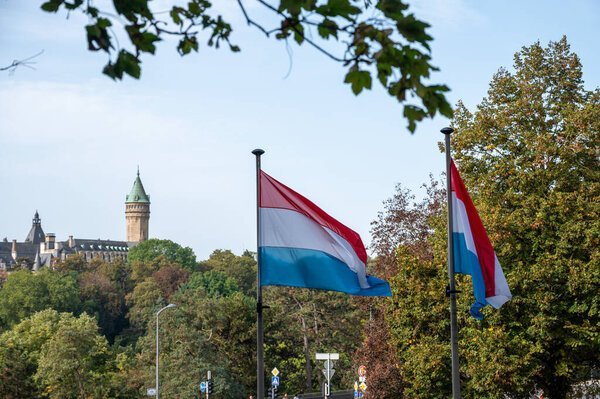
Many travelers pass through Luxembourg on their way between Brussels and Paris—and they’re making a mistake. A country covering just over 2,500 square kilometers manages to encompass a diversity that would be the envy of nations dozens of times larger: rocky gorges in the north, vineyards along the Moselle in the southeast, dense Ardennes forests in the west, and a compact capital with a multi-level skyline. Below is a detailed guide to what to see in Luxembourg, whether you’re visiting for the first time or returning with the intention of exploring the country more deeply.
 ©
depositphotos
©
depositphotos
Photo author - foto-pixel.web.de
Capital: Luxembourg City
The capital is the only city in the world where the headquarters of the European Court of Justice, the European Court of Auditors, and part of the European Parliament are all located. But its administrative status is merely a backdrop. The city itself is built vertically: the historic center stands on a rocky plateau, and beneath it, at a depth of up to forty meters, lie casemates that give way to picturesque neighborhoods descending toward the Alzette and Pétrusse rivers.
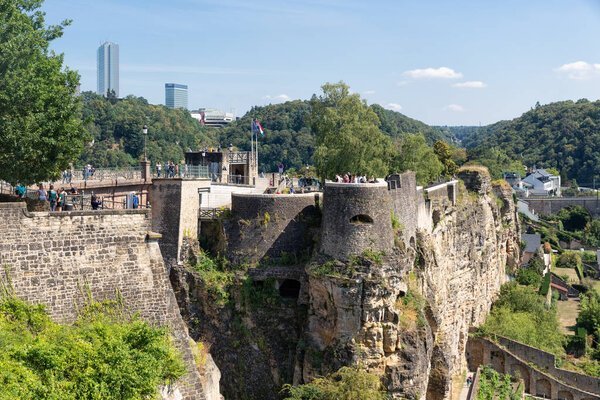
The capital’s main square—Place d’Armes—is a convenient starting point. From there, it’s a ten-minute walk to the Grand Ducal Palace, the Grund district down in the valley, and the panoramic Corniche , which locals call “the most beautiful balcony in Europe.” The observation deck on the Corniche is open 24/7 free of charge and offers perhaps the best view of the lower neighborhoods and the city walls.
The Grund district is worth visiting in the evening: narrow cobblestone streets, terraces by the water, the Church of Saint-Jean-du-Grund, and an atmosphere that is strikingly different from the business-oriented upper city. You can take the free Pfaffenthal elevator back up—it runs from early morning until midnight and connects the lower quarter with the Kirchberg district right through the rock.
 ©
depositphotos
©
depositphotos
Photo author - kruwt
The Bock Casemates: Underground Tunnels Beneath the City
The Casemates (Casemates du Bock) are an extensive network of underground tunnels and galleries carved into the rock foundation of the fortress beginning in 1644. In the 17th–19th centuries, thousands of soldiers took shelter here, and weapons and provisions were stored here. During World War II, the casemates served as a bomb shelter for thirty-five thousand civilians. Today, the section open to visitors comprises about 17 kilometers of galleries.
As of early 2025, admission to the Bock Casemates costs about 10 euros for adults; check the current price on the official Visit Luxembourg website. The casemates are open from March through October; they are closed the rest of the year. It is cool and damp inside even in summer, so a light jacket is recommended.
The casemates are listed as a UNESCO World Heritage Site along with the capital’s historic center—this is one of the few instances where a protected site is literally right under your feet.
Near the casemates is the Rocher du Bock observation deck, offering views of the Alzette Valley and the historic Clausen district. This is perhaps the most photographed spot in Luxembourg—come right when it opens or closer to sunset to avoid the crowds of tour groups.
 ©
depositphotos
©
depositphotos
Photo author - serrnovik
Vianden Castle: The Most Beautiful Castle in the Country
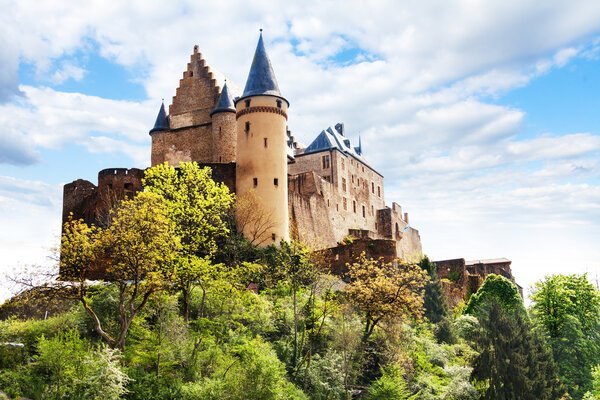
Vianden Castle stands on a sheer cliff above the town of the same name and the Ur River in the north of the country, seventy kilometers from the capital. It is one of the largest feudal castles west of the Rhine: its history dates back to the 3rd–4th centuries, and its current appearance took shape in the 11th–14th centuries. After centuries of decline and partial destruction, the castle was fully restored in the 20th century and is now open to visitors year-round.
Inside, you can explore the Romanesque palace hall, the Gothic chapel, the knights’ halls with weapons and armor, as well as an exhibition dedicated to the history of the Vianden family. As of early 2025, an adult ticket costs about 10 euros; current prices are available on the castle’s official website. In the summer, historical festivals featuring knightly tournaments are held here.
From Vianden, I recommend taking the chairlift (Télésiège de Vianden) up the hill opposite the castle—from there, you’ll see the view that graces the covers of all the guidebooks on Luxembourg. The town of Vianden itself is compact: about two thousand people live here, and there are pleasant cafes and one of the few remaining townhouses in the country that belonged to Victor Hugo—the writer spent several months here in exile in 1871.
 ©
depositphotos
©
depositphotos
Photo author - Teq_77
The Moselle Valley: Wine and Vineyards
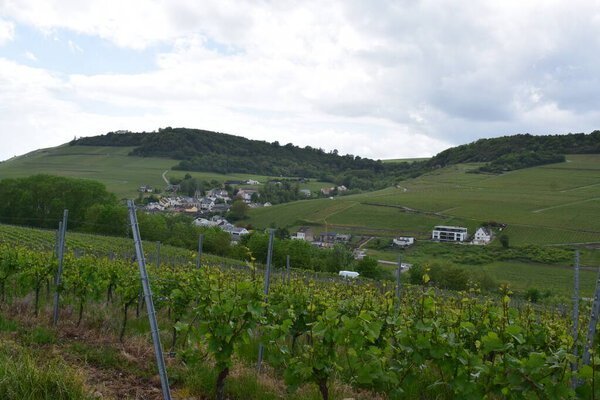
The Luxembourg section of the Moselle Valley (Moselle luxembourgeoise) stretches along the border with Germany for about forty-two kilometers. White wines—Riesling, Pinot Gris, and Auxerrois—and the sparkling Crémant de Luxembourg are produced here. A terrace overlooking the Moselle and endless rows of vineyards offers one of the most relaxing views in the country.
The main wine-growing town is Remich: several large wineries open for tastings are concentrated here. In Ehnen, there is a small Museum of Viticulture and Winemaking (Musée Vitivinicole), which offers a concise overview of local traditions. Admission to the museum is about 5 euros; check the schedule in advance.
If you visit in September, you’ll be there during harvest season: some farms accept volunteer helpers or host open grape festivals. A bike path runs along the entire valley—it’s flat, well-marked, and allows you to ride from Remich to Schengen in a single day—yes, that very Schengen: the village that gave its name to the open-borders agreement is located here.
 ©
depositphotos
©
depositphotos
Photo author - sabinoparente
Müllerthal: Luxembourg’s “Little Switzerland”
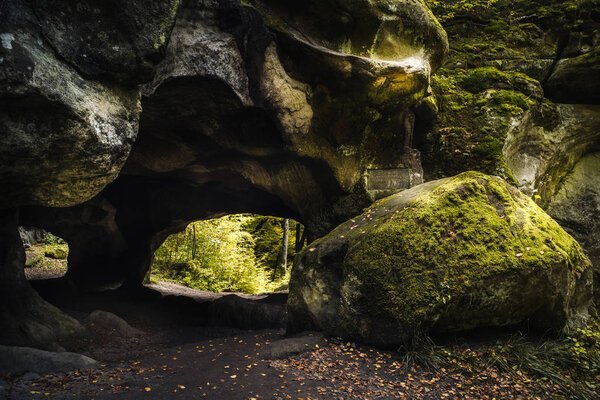
The Müllerthal region in the northeast of the country is known as “Luxembourg’s Little Switzerland” — Petite Suisse luxembourgeoise. The name is just a nickname, but the scenery is truly impressive: sandstone cliffs with whimsical shapes, narrow gorges, mossy streams, and beech forests. There isn’t a single mountain peak here, but the terrain is rugged enough to turn a walk into a real trek.
The backbone of the tourist infrastructure is the Mullerthal Trail network of hiking routes, with a total length of about 112 kilometers. The routes are divided into three loops of varying difficulty, which can be hiked in sections. The base town is Echternach—Luxembourg’s oldest city, featuring a 7th-century Romanesque abbey and a charming market square.
Public transportation access to the Mullerthal is quite good: a bus runs from the capital to Echternach in about 45 minutes. Public transportation in Luxembourg has been completely free for passengers since 2020—a unique feature worldwide that is a pleasure to experience firsthand.
 ©
depositphotos
©
depositphotos
Photo author - ibrester
The Adolphe Bridge and the Grund District: City Walks
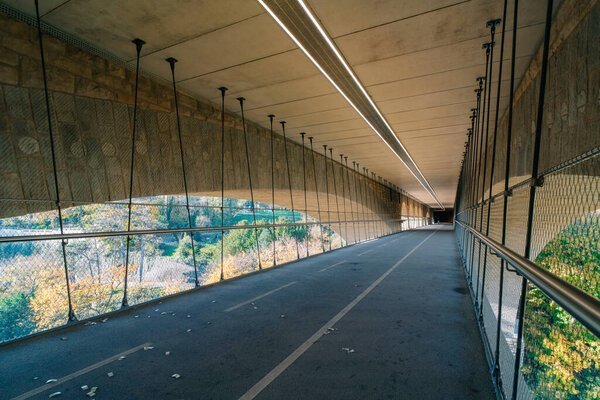
The Adolphe Bridge (Pont Adolphe) is a symbol of the capital and one of the most beautiful stone arch bridges in Europe. Built in 1903, it connects the historic center with the Pétrusse district and remained the world’s largest stone arch bridge for a long time. Today, a modern tram bridge runs alongside it, creating a striking contrast for photography.
Beneath the bridge lies Pétrusse Park—a green space along the river of the same name, featuring walking paths and several old bastions. On a nice day, office workers from neighboring neighborhoods come here for lunch. Walk west through the park, and in twenty minutes you’ll find yourself at the foot of the Hollerich district with its street graffiti and small independent cafés—a complete contrast to the tourist center.
A full day is enough for a leisurely stroll through the capital. If you want to see the casemates, the observation decks, and the Grund, plan on spending two days in the city.
FAQ
Do I need a visa to travel to Luxembourg?
Luxembourg is part of the Schengen Area. Since 2017, Ukrainian citizens have been eligible for a visa-free regime for short-term stays of up to 90 days within a 180-day period. Citizens of most other CIS countries require a Schengen visa. Check the current requirements on the official website of the Luxembourg Embassy or your country’s Ministry of Foreign Affairs.
How to get to Luxembourg?
There are few direct regular flights from most CIS cities to Luxembourg. The most convenient option is to fly with a layover through major European hubs—Warsaw, Vienna, Amsterdam, or Brussels. From Brussels to Luxembourg, it takes about two hours by train; from Paris, just over two hours on the TGV. A direct IC train runs from Frankfurt in about three hours.
How many days do you need for Luxembourg?
Two days are enough to explore the capital. If you want to add Vianden Castle, the Moselle Valley, and the Müllerthal, plan on four to five days. The country is small, and most attractions are accessible as day trips from the capital via public transportation or a rental car.
Is it expensive to travel in Luxembourg?
Luxembourg is one of the most expensive countries in Europe in terms of prices. Dinner at a mid-range restaurant will cost between 20–30 euros per person. Accommodation in the capital starts at 80–100 euros per night in a three-star hotel. Significant savings: public transportation is free for all passengers as of early 2025, and many observation decks are open without an admission fee.
When is the best time to visit Luxembourg?
The best time is from May to October. In the summer (June–August), it’s warm and there are plenty of events, but it’s also the busiest time for tourists. May and September are great for their mild climate and fewer crowds. September is grape harvest season in the Moselle Valley. In winter, some attractions, including the Bock Casemates, are closed.
Is it possible to visit Luxembourg without a car?
Yes, and quite comfortably. The country’s public transportation is completely free and covers most tourist destinations, including Vianden, Echterach, and the Moselle Valley. A car is more convenient for remote villages and routes through the Ardennes, but it’s not necessary for a standard first-time itinerary.
What language is spoken in Luxembourg?
Luxembourg has three official languages: Luxembourgish (Lëtzebuergesch), French, and German. English is widely spoken in tourist areas and hotels. French is the main language of communication in the capital’s restaurants and shops. A few words in Luxembourgish—for example, “Moien” (hello) and “Merci” (thank you, just like in French)—are always met with a smile.
Conclusion
Luxembourg dispels the notion of itself as a boring banking enclave from the very first encounter. It has everything that makes a European trip memorable: world-class medieval architecture, vibrant nature, wine, history, and city life—all within a compact area where you don’t have to waste time traveling.
What to see in Luxembourg first depends on your priorities. If you love cities—spend two days in the capital exploring the casemates and the Grund district. If you’re drawn to nature—the Müllerthal and the Ardennes trails. If you want to combine history with gastronomy—Vianden Castle plus a wine tasting on the Moselle. The country is small enough to cover all of this in a single trip.
Хочешь путешествовать чаще?
280 000 подписчиков уже получают наши письма с авиаскидками до -85% и путешествуют чаще. Теперь твоя очередь!
ok
или
Did you like the article?
😍
😂
😄
😐
🤔
😩
