Travel Ideas

Mexico City: What to see in 1 day

Mexico City is the vast and colorful capital of the Aztec world and the Spanish Colonia, an intertwining of modern metropolitan dynamics and thousands of years of history. Even in one day you can see architectural masterpieces, feel the spirit of ancient cultures and taste authentic dishes. The main thing is to choose the right route.
11 august 2025
AUTHOR: Kateryna Lindt
0
15 min

Folks, don't forget that we have an extremely comfortable iOS application in App Store

Please try it!

Kateryna Lindt
I write routes the way I would advise a friend before a trip - nothing superfluous, just proven and at a comfortable pace.

Short 1-day itinerary for Mexico City

Time

Location

Inspection time

Comment

09:00

Constitution Square (Sokalo) + Cathedral

1 ч

Inspection of the square, photo, visit to the cathedral. Everything is close by.

10:00

Walk to the National Palace

15 min

Short walk. There may be queues to enter.

10:15

National Palace and Diego Rivera's frescoes

1 ч

Advance online registration is recommended.

11:15

Templo Mayor + Museum

1 ч

Tour of the archaeological area and museum.

12:15

Walk to the Palace of Fine Arts

15 min

Walk along the busy main streets.

12:30

Palace of Fine Arts

1 ч

Facade, interior, stained glass windows. You can have a look in the cafe.

13:30

Lunch at the market Mercado de San Juan

1 ч

A place with atmosphere and unusual street food.

14:30

Walk to the Angel of Independence

35-40 min walk

Walk along Paseo de la Reforma, you can make stops.

15:10

Angel of Independence + photo

20-30 min

Photo and short rest.

15:40

Walk to the Museum of Anthropology through Chapultepec Park

15-20 min.

Walk through the green area of the park, possible entrance through the side gate.

16:00

National Museum of Anthropology

1,5 ч

Main halls: Maya, Aztecs, Olmecs, etc.

17:30

Walk in Chapultepec Park or relax by the pond

45-60 min.

Optional - you can go up to the castle or just relax.

18:30

Dinner in the Polanco or Roma Norte area

-

According to taste and mood, many stylish restaurants.

Total: about 8-9 hours of busy itinerary.

Itinerary: a detailed overview of the sights

Constitution Square (Zócalo) and the Metropolitan Cathedral

The Plaza de laConstitución, better known as Zócalo, is the main square of Mexico City and all of Mexico, the heart of the historic center of the capital. It is one of the largest city squares in the world (about 46,800 m²) and the center stage of all the most important events in Mexican history, from the ceremonies of the Aztec Empire to modern political demonstrations and cultural festivals.

In this plaza have taken place:

  • Coronations and sacrifices during the Tenochtitlan era.
  • Public executions under the Spanish colony.
  • Performances of revolutionaries, presidents and artists.
  • The country's main holidays - Independence Day, parades, concerts, religious processions.

The main architectural dominant of the square is the Metropolitan Cathedral of the Assumption of the Blessed Virgin Mary (Catedral Metropolitana), the oldest and largest Catholic cathedral on the American continent. It was begun in 1573 right on the ruins of the Aztec sanctuary Templo Major, and was built for almost 250 years. Inside the cathedral there are 16 chapels, 2 organs, a carved wooden altar and baroque gilded elements.

Why visit?

  • Historical symbol: this is where colonization, Christianization and the transformation of the Aztec capital into the center of New Spain began.
  • Architecture: the harmonious blend of Gothic, Renaissance and Baroque is rare in Latin America.
  • Atmosphere: there are daily parades, changing of the guard at the flag, street musicians and artists. You can feel the pulse of the real Mexico here.
  • Cathedral: impressive both inside and out - especially the main altars and organs. If you wish, you can climb to the roof and see the city from above.

Legends and facts

  • Underneath the cathedral are underground galleries where the remains of the archbishops rest.
  • Due to the shifting ground, part of the cathedral began to "sag" over time and had to be reinforced with a special engineering system.
  • The name "Zócalo" means "plinth" - originally it was planned to put a monument, but only the base was built. The name caught on and became a household name - it is now the name of the main squares throughout the country.

Practical information

Address: Plaza de la Constitución S/N, Centro Histórico, Cuauhtémoc, CDMX, México.

Opening hours: 24 hours a day, free access

Price: admission to the plaza is free, admission to the cathedral is also free (there may be a small fee for climbing the bell tower).

undefined
Photo author - mekhiko

The National Palace and the murals of Diego Rivera

The National Palace (Palacio Nacional) is a monumental building 200 meters long, occupying the eastern side of the Plaza del Socalo. It is the historical and political seat of the Mexican government, built in the 16th century on the site of the palace of Montezuma, ruler of the Aztecs.

Today, the building serves as the official residence of the president (although he does not reside here) and also serves as a museum and cultural center.

The main attraction for tourists is the courtyard with monumental murals by Diego Rivera, painted between 1929 and 1935. They cover thousands of years of Mexican history, from the Mayan and Aztec civilizations to Spanish colonization and the Mexican Revolution. Rivera's murals are not just paintings, but a visual manifesto of the country's history, pain and hope. They are impressive in their scale (the entire wall of the courtyard), detail, deep symbolism and artistic power. Even without a guide, you can feel the atmosphere and reflect on the fate of Mexico.

Why it's worth a visit.

  • World-class art: the murals of Diego Rivera are one of the main works of Mexican muralism. They are full of symbolism, details and characters that tell the country's history in a vivid language of images.
  • The historic architecture: magnificent arches, colonnades, courtyards with fountains and ancient doors all reflect the grandeur of the colonial period.
  • Free entry: unlike many other attractions, the National Palace is open to all without charge.
  • Political significance: the building is a symbol of Mexican power and freedom, with the annual "shout of independence" ceremony held here on September 15.

Interesting facts and legends

  • The building itself is built from the stones of the ancient palace of Montezuma, destroyed by the Spaniards.
  • According to legend, the palace is still haunted by the ghost of one of the viceroys killed during the coup.
  • Some elements of Rivera's frescoes caused scandal in their time, such as scenes of Karl Marx, Lenin and criticism of capitalism.

Practical information

Address: Calle Moneda No. 1, Centro Histórico, Cuauhtémoc, CDMX, México.

Opening hours: Tuesday through Sunday, 9:00 a.m. to 5:00 p.m.

Admission: Free of charge, upon presentation of identification document (passport or copy).

Official website: gob.mx/presidencia

undefined
Photo author - livejournal

Templo Mayor and Museum

Templo Mayor is the archaeological heart of the ancient Aztec capital of Tenochtitlan, hidden beneath modern Mexico City. The temple was long lost until it was accidentally found in 1978 during excavation work in the center of the city. Now it is home to an open-air archaeological zone and a modern museum that helps you look at the past through the eyes of an ancient civilization.

Historical context

Templo Mayor (literally, "Great Temple") was the main ritual center of the Aztecs. It was dedicated to two gods at once:

  • Huitzilopochtli - the god of war and the sun;
  • Tlaloc, god of rain and agriculture.

The temple consisted of two symmetrical towers and was located in the very center of Tenochtitlan - on the very place where, according to legend, an eagle pecked a snake on a cactus (the symbol depictedon the coat of arms of Mexico).

Each time after the expansion of the empire, the Aztecs rebuilt the temple, adding more and more levels on top of the old ones. Eventually it became a seven-layered pyramid. All these layers can be seen today in a section right on the territory of the archaeological park.

undefined
Photo author - museo

Templo Mayor Museum

A modern museum (just a couple steps away from the ruins) completes the experience. Collected here are:

  • Sacrificial weapons;
  • Ceramics;
  • Stone heads of deities;
  • Animal remains and human skulls;
  • And, most famous of all, the Monolith of the goddess Coyolshauka.

The museum is decorated in a modern way, with good lighting and explanations (Spanish and English). Some halls even have the background sound of rain or drums.

Why it's worth a visit.

  • Immersion in Mexico City's roots: you'll see what the city looked like before the Spaniards came.
  • A rare opportunity to see an Aztec temple in the heart of the metropolis.
  • Contrast of times: behind you is a colonial cathedral, and in front of your eyes - the ruins of pre-Columbian civilization.
  • The museum is impressive and helps you understand the Aztec way of life, beliefs and brutal rituals.

Practical information

  • Address: Seminario 8, Centro Histórico, 06060 Ciudad de México.
  • Opening hours: Tues-Fri: 9:00-17:00, closed Mon-Fri.
  • Tickets: about 90 Mexican pesos (~5 USD)
  • Official Website: https://www.templomayor.inah.gob.mx
  • Language of descriptions in the museum: Spanish and English

Palacio de Bellas Artes (Palace of Fine Arts)

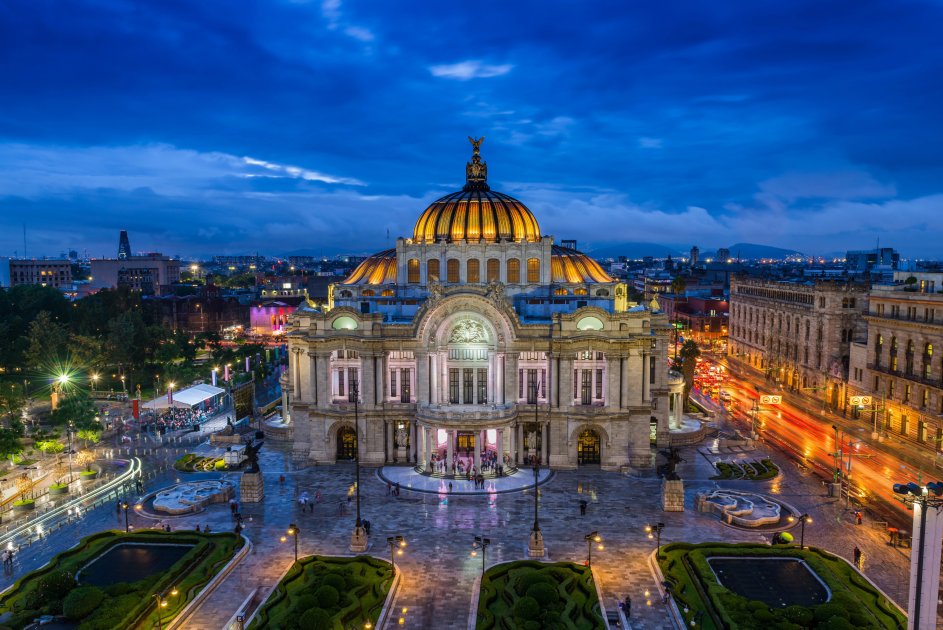
Palacio de Bellas Artes is not only the main cultural center of Mexico City, but also one of the most beautiful and symbolic buildings of the city. Located next to the Alameda Central Park, this palace impresses with its majestic architecture and rich interiors. It serves as a stage for theater productions, ballet, opera, and is also a museum where famous Mexican artists of the 20th century are exhibited.

History and architecture

Construction of the palace began in 1904 by order of dictator Porfirio Diaz, who dreamed of a building in the Art Nouveau style - as a symbol of progress and wealth of Mexico. However, the project was delayed for 30 years due to the revolution and technical difficulties associated with the swampy soil. As a result, the building was only completed in 1934, adding Art Deco elements to the original style.

  • The facade is made of white Carrara marble shipped from Italy.
  • The interiors are decorated with stained glass, mosaics, moldings and painted ceilings.
  • The dome changes color depending on the light, thanks to orange and gold ceramics.

Murals and Museum

The second floor of the palace features monumental murals painted by the great Mexican artists:

  • Diego Rivera: "The Man Who Controls the Universe"
  • Rufino Tamayo, José Clemente Orozco, David Alfaro Siqueiros, all representing the era of Mexican muralism

There is also the Museo Nacional de Arquitectura, dedicated to urban planning and architectural projects.

Why visit?

  • See a unique building that combines European Art Nouveau and Mexican spirit.
  • Admire the greatest murals of the 20th century and understand the ideology of post-revolutionary art.
  • Find yourself in the center of Mexico City's cultural life: from ballet to jazz concerts.
  • A great photo area: the facade of the palace is one of the most Instagrammed in the city.

Useful information

  • Address: Av. Juárez, Centro Histórico, 06050 Ciudad de México.
  • Opening hours: Tuesday - Sunday, 11:00-17:00 (Monday - day off)
  • Tickets:
    Museum admission: ~90 pesos
    Tours and performances - according to the schedule on the official website.

Lunch at the market: Mercado de San Juan

Mercado de San Juan is one of Mexico City's most famous gastronomic markets, located in the heart of the city. It is known for its atmosphere, exotic selection of products and wide range of Mexican cuisine. This is where foodies, chefs and gastronomic adventurers come to try something special.

Here you can snack on classic tacos and tamales, as well as more exotic dishes like escamoles (ant roe), crocodile meat or Mayan pork stew - cochinita pibil. All dishes are prepared in front of you, and many vendors are happy to talk about the recipes and help you choose the best.

Why it's worth a visit.

  • This is a unique place to experience real, authentic Mexican cuisine.
  • A chance to try delicacies you won't find in tourist restaurants.
  • The vibrant, lively atmosphere of the real Mexico City - a great place to get a feel for the city.

Practical information:

  • Address: Ernesto Pugibet 21, Centro Histórico, 06000 Ciudad de México
  • Opening hours: daily from 7:00 to 17:00
  • Average bill: from 100 to 250 Mexican pesos for lunch
undefined
Photo author - foodwinetravel

Subscribe to our telegram channel @tripmydream to be the first to hear travel news and promotions!

Angel of Independence Monument (Ángel de la Independencia)

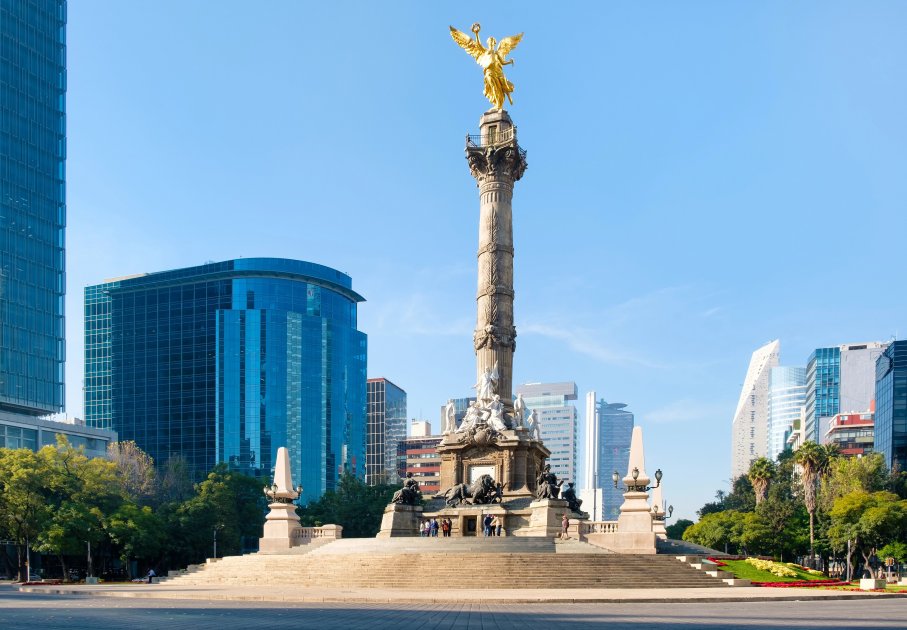
TheAngel of Independence, or simply El Ángel, is one of Mexico City's most recognizable and symbolic landmarks. This majestic monument is located on Paseo de la Reforma Avenue and commemorates the Mexican struggle for independence from Spain.

The monument was inaugurated in 1910 to commemorate the 100th anniversary of the start of the War of Independence. Its architecture is inspired by European triumphal columns. At the top of the 45-meter column is a statue of a golden angel (the Goddess of Victory with a laurel wreath and lancet), made of bronze and covered with gold leaf. It is one of the most photographed sights in the city.

At the foot of the monument is a mausoleum where the remains of Mexico's national heroes Miguel Hidalgo, Jose Maria Morelos, Vicente Guerrero and others are buried.

Why it's worth a visit.

  • One of the main symbols of Mexico City and Mexican identity.
  • A great opportunity to take memorable photos against the backdrop of the city's main avenue.
  • From here you have a good view of the Paseo de la Reforma, especially at sunset.
  • On weekends and holidays, concerts, rallies and parades are often held here.

Practical information:

  • Address: Paseo de la Reforma s/n, Juárez, Cuauhtémoc, 06500 Ciudad de México
  • Entrance: free of charge (outside viewing)
  • Visiting time: 24 hours a day, but we recommendvisiting during daylight hours or at sunset for the best photos.

Climbing the column is only possible on guided tours by prior arrangement and is not always open to the public.

You can book a hotel in Mexico City with a discount of up to -65% at.

Museo Nacional de Antropología

Museo Nacional de Antropología is Mexico's main and largest museum dedicated to the history, archaeology and culture of the pre-Columbian civilizations of Mesoamerica. It is a true must-see not only for history buffs, but also for anyone who wants to gain a deeper understanding of what ancient Mexico was like.

Opened in 1964, the museum is housed in a huge modern building in Chapultepec Park. It consists of 23 halls displaying artifacts from the Olmec, Mayan, Zapotec, Totonac and, of course, Aztec eras. The main gem of the collection is the Stone of the Sun (Piedra del Sol), also known as the Aztec calendar.

Interactive exhibitions, temple reconstructions, ancient sculptures and everyday objects turn a visit to the museum into an exciting journey through the millennia.

Why visit?

  • It is one of the best museums in Latin America with the richest collection of artifacts.
  • Allows a deeper understanding of the legacy of the civilizations that built Teotihuacan, Chichen Itza and Tenochtitlan.
  • The perfect end to the itinerary: after exploring modern Mexico City, step back in time.

Practical information:

  • Address: Av. Paseo de la Reforma y Calzada Gandhi S/N, Bosque de Chapultepec, 11560 Ciudad de México
  • Opening hours: W-FS from 09:00 to 20:00 (Monday - day off).
  • Ticket price:
    Entrance fee: 95 MXN (~5 USD)
    Free for students, teachers and children under 13 years old
  • Online tickets: available on the museum's official website or through aggregators (e.g. GetYourGuide)
  • Tours: available in Spanish and English, including grouptours
undefined
Photo author - tonkosti

17:15 - Chapultepec Park and observation deck

The Bosque de Chapultepec is the green heart of Mexico City and one of the largest urban parks in the world. Its area exceeds 600 hectares and it's easy to spend a whole day here. But even in a short time a walk along its alleys will give you a break from the hustle and bustle of the city and allow you to immerse yourself in the atmosphere of Mexico.

The park is divided into several sectors and unites cultural, historical and natural objects: the famous National Museum of Anthropology, zoo, lakes with boats, gardens, monuments and, of course, Chapultepec Castle - the former residence of Emperor Maximilian and Mexican presidents.

Chapultepec Castle observation deck

At the top of the hill rises the Castillo de Chapultepec (Chapultepec Castle). It was built in the 18th century in the neoclassical style and later rebuilt in the French style. Today the building houses the National History Museum and the castle's observation deck offers spectacular views of the park, the city and the Paseo de la Reforma.

Why visit.

  • One of the largest parks in Latin America with a rich history and diverse locations.
  • Great views from the castle's observation deck over the city.
  • A great place to relax, stroll and picnic at the end of the day.
  • Lots of street musicians, artists and a colorful Mexican atmosphere.

Practical information:

  • Theaddress is Bosque de Chapultepec I Secc, Miguel Hidalgo, 11100 Ciudad de México
  • Opening hours:
    Park: daily, around the clock
    Chapultepec Castle: Tues-Fri, 09:00-17:00, Mon - off
  • Tickets:
    Park - free
    Castle - ~$95 MXN (≈5 USD); admission is free on Sundays for Mexican citizens
  • Website for tickets: https://mnh.inah.gob.mx
undefined
Photo author - planetofhotels

Mexico City's gastronomy: what to try in a day

Mexico City's cuisine is a simultaneous introduction to the city's culture, history and street life. Even in a single day, you can try iconic dishes that will be remembered forever.

Tacos are a symbol of Mexican cuisine

What it is: a corn or wheat tortilla with different fillings, from pork al pastor (like shawarma) to beef stew, mushrooms, cactus or seafood.

Where to try: street tents around town or restaurants like El Huequito and Taquería Orinoco.

Price: 15 to 50 MXN for a single taco.

Tamale

What it is: corn dough steamed in corn leaves with meat, cheese or sweet filling.

Where to find: morning markets such as Mercado de Medellín or Mercado de San Juan.

Tip: served hot, especially popular for breakfast.

Price: 20 to 35 MXN.

Pozole soup.

What it is: a traditional soup based on corn kernels with meat (most often pork) and spices. Served with lime, radish, cabbage and tostada.

Where to try: La Casa de Toño is a popular spot among locals.

Price: 80 to 150 MXN.

Mole

What it is: a thick sauce based on chili, cocoa, nuts and spices, served with chicken or turkey.

Where to try it: El Cardenal or Azul Histórico.

Price: 150 to 250 MXN.

Hot chocolate and churros

What it is: the perfect dessert for a break - crispy fried dough sticks sprinkled with sugar and cinnamon, dipped in thick hot chocolate.

Where: the legendary Churrería El Moro.

Price: 60-80 MXN per serving.

undefined
Photo author - mexico

Aguas frescas

What it is: natural refreshing drinks made from fruits, flowers and grains (e.g. horchata, jamaica).

Where: almost any café, market or street spots.

Price: 20 to 40 MXN per glass.

Frequently asked questions

How long does it take to see central Mexico City?

If you have only one day, the center of Mexico City is ideal for a walking route. The main attractions - the Cathedral, Zocalo, National Palace, Templo Mayor, Palace of Fine Arts - are within walking distance and can be covered in 3-4 hours of leisurely walking.

What is the optimal start time for the route?

It is best to start the route at 9:00 am to avoid the heat and crowds. Many museums open at 9:00–10:00 am, and before that you can stroll around the Zocalo and visit the cathedral.

How safe is it to walk around Mexico City?

The city centre and tourist routes are generally safe during the day, especially in busy areas. As in any metropolis, it is worth keeping an eye on your personal belongings, not wearing jewellery and avoiding walking along deserted streets at night.

What transport to use within the city?

In the center of Mexico City, most attractions are within walking distance. For more remote points, such as the Museum of Anthropology or Chapultepec Park, it is convenient to use Uber or the metro (cheaper, but can be crowded).

Where is the best place to have lunch in Mexico City?

An excellent choice for your itinerary is the Mercado de San Juan market, a true gastronomic paradise with Mexican cuisine, fresh juices and a local atmosphere. There are also cafes nearby with national cuisine.

Is it possible to visit the National Museum of Anthropology in an hour?

Technically, yes, but this will only be a superficial acquaintance. The museum is very large, with dozens of halls. In an hour you can see the main exhibits (for example, the Aztec and Mayan hall), but it is better to plan for 1.5-2 hours.

Where can I buy tickets to the National Palace and the Museum of Anthropology?

National Palace: free entry, but ID is required. Queues are possible. National Museum of Anthropology: tickets can be purchased at the entrance or in advance through the official website (Spanish).

Is it possible to change the route if you are tired?

Yes! If you feel tired, you can shorten the route and, for example, replace Chapultepec or the Angel of Independence with a quiet walk or an early dinner in one of the areas: Roma Norte or Polanco.

Conclusion

One day in Mexico City is not a full immersion, but a real introduction to culture and history, architecture and gastronomy. Save your itinerary, buy your tickets in advance and enjoy a busy day in the capital of ancient civilizations and modern Mexico.

Take out insurance for traveling abroad in a couple of clicks!


Хочешь путешествовать чаще?
280 000 подписчиков уже получают наши письма с авиаскидками до -85% и путешествуют чаще. Теперь твоя очередь!
ok
или
Did you like the article?
😍
😂
😄
😐
🤔
😩
SHARE WITH FRIENDS:
No comments
tripmydream - travel service, that helps to find compare and buy best flights and rooms worldwide with the given budget. All necessary information for travelers - is right here!