Taiwan at a Glance: What You Need to Know Before You Go
Contrasts, nature, and hospitality—three reasons why it’s worth flying to the island.
Folks, don't forget that we have an extremely comfortable iOS application in App Store
Please try it!

Contrasts, nature, and hospitality—three reasons why it’s worth flying to the island.
 ©
depositphotos
©
depositphotos
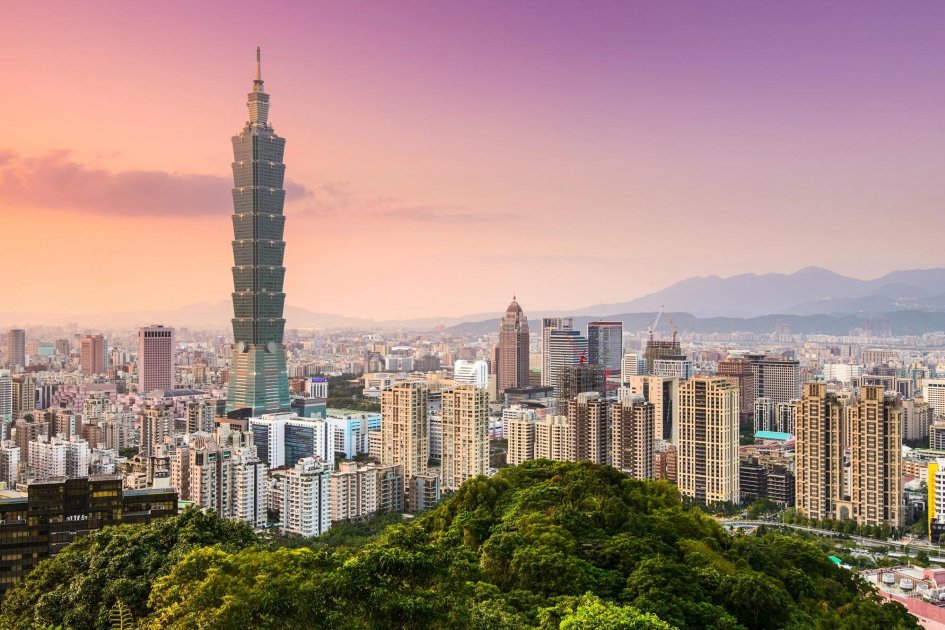
Taipei is the first thing most tourists see on the island. The city skillfully blends its Japanese past, Chinese traditions, and Asian modernity. Here, ancient temples stand in the shadow of glass skyscrapers, and the subway is cleaner than in most European capitals. The population is about 2.7 million, and most routes around the island start from Taipei.
Until 2010, Taipei 101 was the world’s tallest skyscraper (509 meters). Today, it is the absolute symbol of Taiwan. A high-speed elevator will whisk you up to the observation deck on the 89th floor in 37 seconds. The best time to go up is after 4:00 PM: in a single visit, you’ll see both the sunset and the night panorama. Inside is a multi-level shopping mall featuring flagship stores of global brands and Taiwanese designers.
Buy your ticket online in advance—it saves you from waiting in line. A basic ticket to the observation deck (88th–89th floors) costs about 600 TWD, while the Skyline 460 ticket, which includes access to the 101st floor, costs about 3,000 TWD (as of 2026). Access to the outdoor deck on the 91st floor is weather-dependent.
Longshan Temple is Taipei’s oldest Buddhist temple, built in 1738. Here, Buddhism, Taoism, and folk beliefs coexist peacefully—a rare phenomenon even for Asia. Come early in the morning: you’ll see genuine worshippers praying, not a tourist show. The interior is decorated with carved wooden panels and intricate dragons. Admission is free; the Wanhua district surrounding the temple is one of the oldest in Taipei, rich in historic streets and small restaurants.
A grand white complex with a pagoda-style roof and a 70-meter-tall central tower. It is located on Freedom Square—one of the largest open spaces in Asia. Twice a day, a ceremonial changing of the guard takes place here—a spectacle well worth planning your visit around. Nearby are the National Theater and the National Concert Hall, built in the classical Chinese style. Admission to the memorial hall is free; the changing of the guard ceremony usually takes place at 9:00 a.m. and 5:00 p.m. (check the current schedule on site).
The National Palace Museum is one of the world’s richest museums of Chinese art, housing over 700,000 exhibits and artifacts collected over eight millennia of Chinese history. Many masterpieces were brought from mainland China in 1948. The main attraction is the jadeite “Cabbage” (Jadeite Cabbage), for which a line forms daily.
An audio guide is available in several languages via a QR code. Plan on at least 3 hours for a full tour. Admission is about 350 TWD.
Night markets are the soul of Taiwan. People come here not just to eat, but to immerse themselves in the atmosphere: the shouts of vendors, the sizzling of deep-fried food, the smell of spices, and crowds of locals and tourists.
Shilin Night Market is the largest in Taipei. It’s open daily starting around 5:00 PM. Try the oyster omelet, fried chicken cutlet (paigu), and bubble tea—this is where the drink originated.
Raohe Street Night Market is more compact and atmospheric. The entrance is through the gates of a Buddhist temple. It’s perfect for your first taste of street food.
The main rule of the night market: buy a little bit from different stalls so you can try as much as possible. The average bill per person is 200–350 TWD.
A Japanese-style pedestrian shopping and entertainment district—Taiwan’s answer to both Tokyo’s Akihabara and Harajuku. Bright neon signs, street art, anime shops, indie movie theaters, and street musicians. It comes alive as evening approaches.
Just 30 minutes from downtown Taipei—and you’re on a volcano. Yangmingshan National Park features steaming fumaroles, sulfur springs, rhododendron fields, and stunning views of the city and the strait. In spring (March–April), the park is awash in cherry blossoms and azaleas. The hot springs in Bayan are the best way to relax after a walk. You can get there by taking the Red 5 bus from Jiatan Metro Station. Admission to the park is free, but there is a fee for the hot springs.
 ©
depositphotos
©
depositphotos
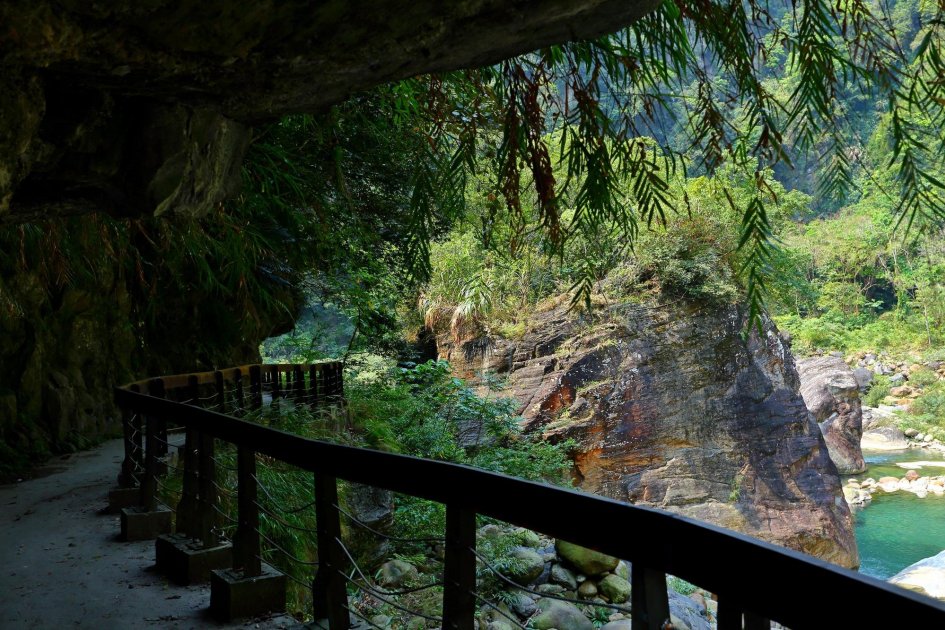
Taroko Gorge is worth traveling halfway around the world to see. Taiwan’s nature at its most beautiful: marble cliffs rising up to 1,000 meters, crystal-clear turquoise rivers, suspension bridges over chasms, and Buddhist monasteries perched on rocky outcrops. The park is located on the east coast and can be reached in 2 hours by high-speed train to Hualien.
Taiwan’s premier natural attraction. A canyon over a kilometer deep cuts through a mountain range of marble and granite. The Zhuilu Old Trail is one of the most breathtaking hiking routes in Asia: a narrow path literally carved into a sheer cliff above the river. It requires a permit and good physical fitness.
Permits for the Zhuilu Old Trail must be obtained in advance online through the park administration’s website. It is best to hire a local guide for the labyrinthine trails.
Xiangde (Changde Temple) is a snow-white Buddhist monastery literally carved into the rock high above the river. It is one of the most photographed spots on the island. A stone staircase with hundreds of steps leads up to the monastery—the views from each flight of steps become increasingly breathtaking. The best light for photos is in the morning (8–10 a.m.) or on cloudy days: soft, diffused lighting.
One of the park’s most beautiful waterfalls, accessible via a picturesque pedestrian tunnel carved right through the rocks. At the end of the route are the “Water Curtains”: water literally pours from the cave’s ceiling. The route is 2.1 km long and takes about 1.5 hours one way.
Bring a raincoat or a change of clothes: water drips regularly in the tunnel. A flashlight will also come in handy.
Taiwan is located in a seismically active zone. After the 2024 earthquake, part of the Taroko trails was closed for a long time for restoration. Before visiting, be sure to check the current status of the trails on the park’s official website—some sections may remain closed in 2026.
 ©
depositphotos
©
depositphotos
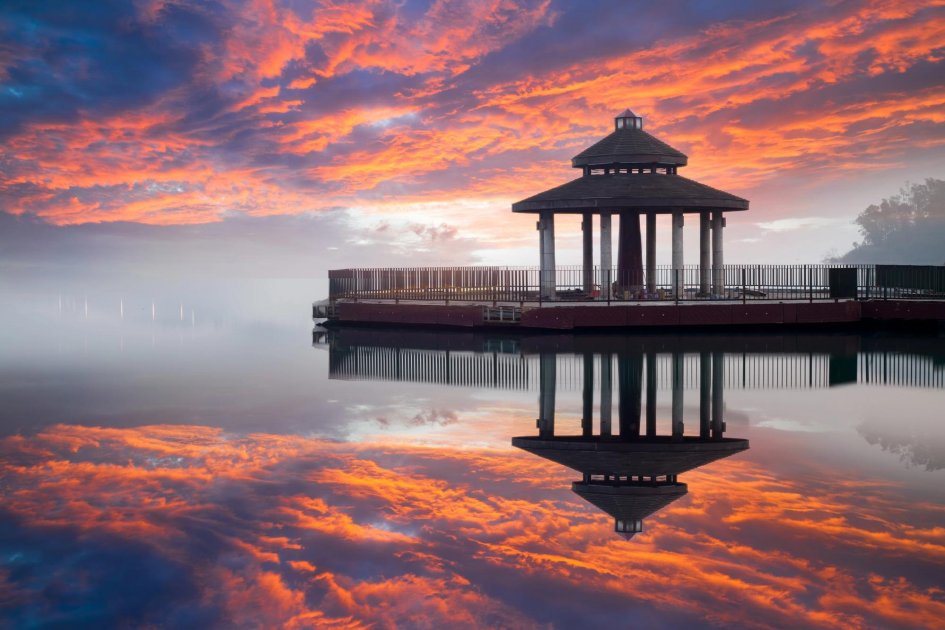
Sun Moon Lake is Taiwan’s largest lake and one of the most beautiful in Asia. It got its name from its unusual shape: one part resembles a round sun, the other a crescent moon. Lalou Island in the middle of the lake is a sacred site for the Thao people, the indigenous people of Taiwan. The lake is located in the central part of the island; it takes about 3 hours to get there from Taipei by bus or by train to Taichung with a transfer to a bus.
The nine-story pagoda atop a hill overlooking the lake is the best viewpoint in the entire region. From the summit, you’ll see the classic view featured on tourist posters: a mirror-like expanse of water surrounded by green hills. The hike up takes about 20 minutes along a forest trail.
Come at dawn (6–7 a.m.)—the fog over the lake creates a magical scene.
A majestic temple complex on the northern shore of the lake, dedicated to Confucius and the god of war, Guan Yu. Two 30-meter-tall guardian lion statues guard the entrance—according to legend, they prevent the lake’s water from rising. Inside are several halls, each with its own architectural style. The temple is open daily, and admission is free. The best photo is taken from the bottom of the stairs, looking up.
Ita Thao is the only place on the lake that belongs to the Sao people. A small market with authentic handmade crafts, traditional food, and local guides offers a wonderful opportunity to hear the island’s history from those who lived here long before the Chinese settlers.
Staying overnight is a good idea: most tourists leave after sunset, and the atmosphere on the lake becomes truly intimate.
 ©
depositphotos
©
depositphotos
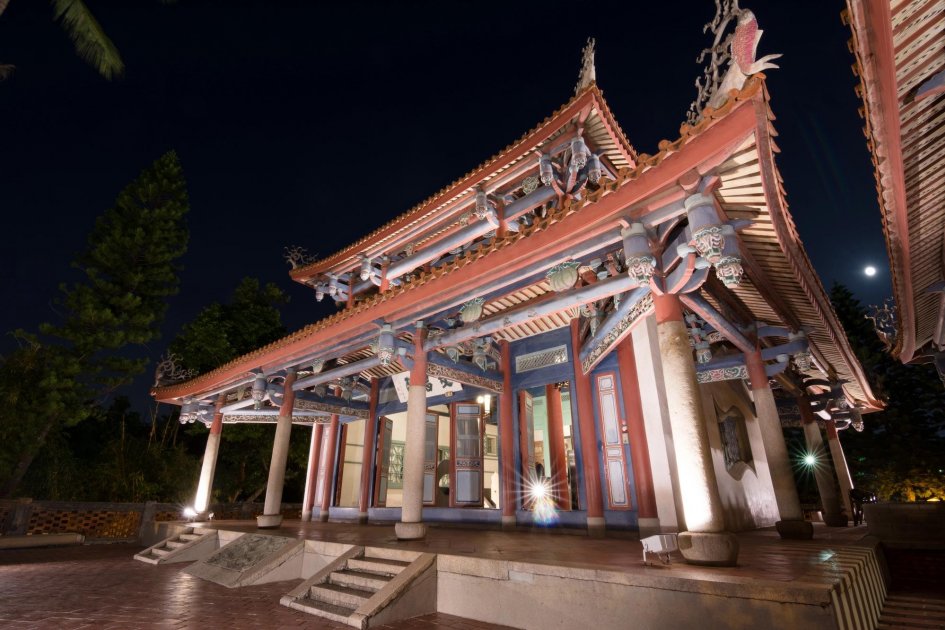
Tainan is the island’s oldest city and its cultural capital. It boasts more historic temples and fortifications than any other city in Taiwan. The Japanese colonial period left a noticeable mark on the architecture—a stroll through the city center evokes both China and Japan. Tainan is called the gastronomic capital of Taiwan, and for good reason.
This 17th-century Dutch fortress is proof that Taiwan’s history was by no means provincial. The fort was built in 1624 and remained the island’s main commercial and military hub for a long time. Today, it houses a small museum and an observation tower overlooking the river mouth. Nearby is the old Anping shopping district, with Taiwanese sweets and traditional shops.
A former Dutch fort, the Province, rebuilt in the Chinese style during the Qing Dynasty. Today, it is one of Tainan’s main landmarks. In the courtyard stand stone turtles carrying nine memorial steles on their backs—a gift from the Chinese emperor to the Taiwanese leaders. Evening lighting transforms the complex into a photo backdrop. Admission is about 50 TWD.
Local specialties: beef soup (niurou tang) made with the freshest meat, served with hot rice; dan zai mian—vermicelli with seafood; and the island’s most delicious Taiwanese-style pastries.
In the morning, stop by any street market—breakfast will cost less than $2. Book a place to stay in the Old City area: most temples and forts are within walking distance.
 ©
depositphotos
©
depositphotos
Kaohsiung was long considered an industrial city with no tourist appeal. Today, it is one of the most rapidly transforming cities in Asia: former docks have been turned into cultural spaces, waterfronts into art installations, and the port has become a backdrop for contemporary art. Population: 2.7 million; terminus of the HSR high-speed rail line.
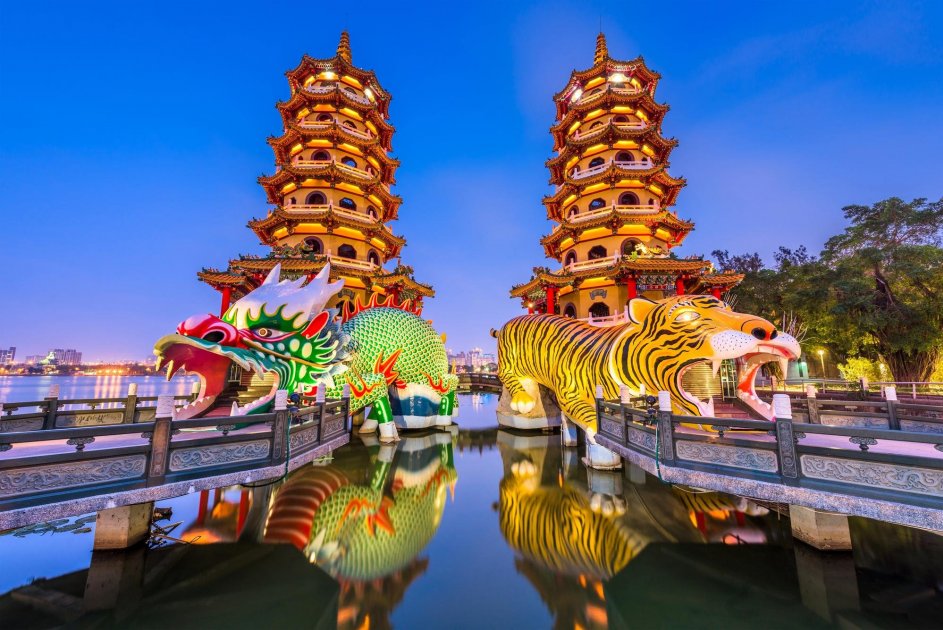
One of the island’s most unusual attractions: two seven-story pagodas standing by the lake, connected by bridges shaped like the winding bodies of a dragon and a tiger. You must enter through the dragon’s mouth and exit through the tiger’s mouth: this brings good luck and “washes away” sins. The interior is decorated with vibrant murals depicting scenes from Chinese mythology.
The best light for photos is in the early evening, when the sunset reflects on the water. Admission is free.
Former early 20th-century port warehouses that have been transformed into one of Taiwan’s main cultural hubs. Contemporary art galleries, design shops, cafes, and art installations are located in three clusters along the waterfront. On weekends, there are street musicians and farmers’ markets. The easiest way to get there is via the Circular Light Rail line (Hamasen Station) or the Yellow Metro Line (Yanchengpu).
Taiwan’s largest Buddhist monastery complex, located 30 minutes from Kaohsiung. The main 36-meter-tall Buddha statue is visible from several kilometers away. The grounds feature several temple halls, a museum, monastic gardens, and observation decks. The monastery is active: hundreds of monks live and study here.
Admission is free. There is a vegetarian restaurant. On Sundays, visitors can attend morning meditation—check the schedule in advance.
 ©
depositphotos
©
depositphotos
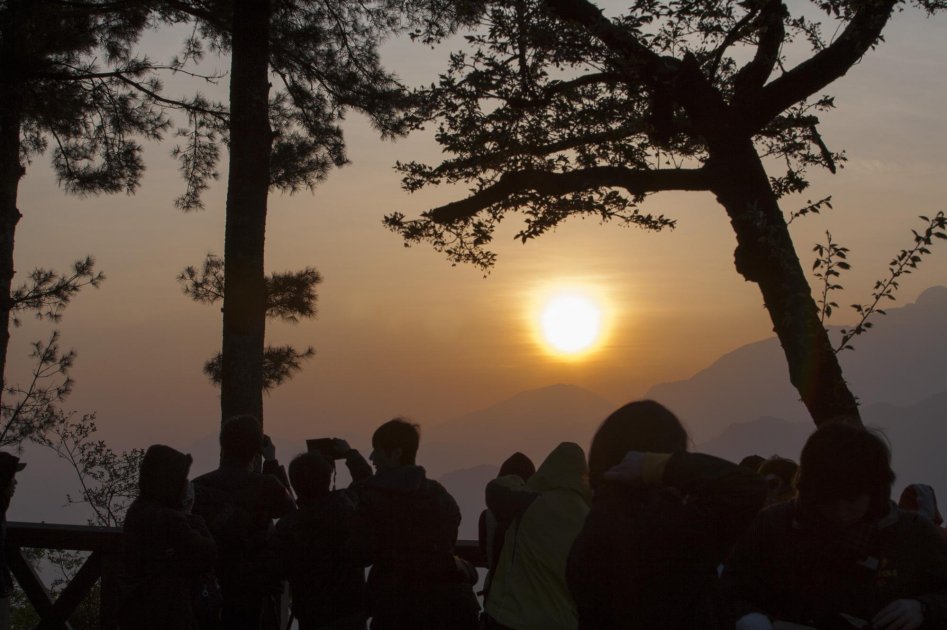
A mountain range at an altitude of 2,000–2,500 meters, famous for its thousand-year-old cypress trees, Japanese narrow-gauge railway, and legendary sunrises over a sea of clouds. Alishan’s tea plantations produce one of the world’s finest oolong teas. In spring (March–April), the mountain park is awash with cherry blossoms.
Sunrise over Alishan is a must-see spectacle. Get a spot at the Zhushan observation deck an hour before sunrise. The narrow-gauge railway to the sunrise viewing point runs only in the morning and is often crowded.
The island’s southernmost national park, where the Pacific, South China, and Taiwan Straits converge along the coastline. Coral reefs, tropical forests, sand dunes, and the Eluanbi Lighthouse—one of Asia’s most striking lighthouses. The Spring Scream rock festival takes place here every April.
The best time to visit Kenting is October–February (before typhoon season). Surfing, diving, and snorkeling—there’s something for everyone.
A cape in the north of the island with a completely otherworldly landscape: millions of years of marine erosion have created rock formations of bizarre shapes. The most famous is “Queen’s Head,” a rock resembling the profile of an Egyptian pharaoh. It gets very crowded—come in the morning.
Admission is about 80 TWD. Direct bus services run from Taipei (about 1.5 hours). The “Queen’s Head” rock is getting thinner every year due to erosion—don’t put off your visit.
Most tourists stay on the west coast with its cities and infrastructure. The east coast offers almost untouched nature: sheer cliffs plunge straight into the Pacific Ocean, and indigenous villages have preserved a way of life that dates back hundreds of years.
This quiet town is the gateway to Taroko National Park. The Huadong Valley, nestled between two mountain ranges, offers one of the island’s most beautiful landscapes: rice paddies, Amis villages, and endless horizons. A bike ride along the Shuiguan River is a must-do.
Bike rental in Hualien costs about 200 TWD per day. The Shuiguan route—24 km through a picturesque valley—can easily be covered in half a day at a leisurely pace.
Taitung is the island’s most authentic city, with almost no mass tourism. Green Island (Lyudao), 33 km off the coast, is home to sea turtles, underwater cliffs, and warm marine thermal springs. The hot springs here are salty—one of only three such places in the world.
The ferry ride to Green Island takes 50 minutes. The best time to visit is April–June, before typhoon season.
This itinerary covers the island’s main highlights and leaves time to soak up the atmosphere. Travel is via HSR high-speed trains and TRA regular trains.
Day | What to watch |
Day 1–2 | Taipei: Taipei 101, Longshan, Freedom Square, National Palace Museum, Ximending Night Market |
Day 3 | Day trip: Yangmingshan (volcano) or Yeliu Geopark |
Days 4–5 | Hualien and Taroko National Park: Taroko Gorge, Xiangde Monastery, Baiyang Waterfall |
Day 6 | Sun Moon Lake: sunrise, Qian Pagoda, Wenwu Temple, Ita Tao Village |
Day 7 | Alishan: sunrise above the clouds, cypress forest, tea plantations |
Day 8 | Tainan: Zeelandia Fort, Chikan Tower, culinary walking tour |
Day 9 | Kaohsiung: Dragon and Tiger Pagodas, Pier-2, Fo Guang Shan Monastery |
Day 10 | Return to Taipei by HSR, shopping, departure |
The 3- or 5-day Taiwan Rail Pass offers unlimited travel on TRA trains throughout the island. The high-speed HSR is paid for separately or with a separate HSR Pass for foreigners.
Flight. There are no direct flights from Ukrainian cities to Taipei. Most travelers fly with a layover in Istanbul, Doha, Dubai, Warsaw, or Frankfurt. Travel time with a layover is 17 hours or more. The main gateway is Taoyuan International Airport (TPE) near Taipei.
Around the island:
Buy an Easy Card (悠遊卡) at any airport terminal or metro station—it’s a single card for the metro, buses, YouBike bike rentals, and payments at 7-Eleven stores. The card costs 100 TWD plus a top-up.
Taiwan is significantly cheaper than Japan and Singapore, but more expensive than most countries in Southeast Asia. Estimated prices in 2026:
Taiwanese cuisine is one of the most interesting in Asia: a blend of Chinese foundations with Japanese influences, recipes from 16 indigenous peoples, and unique local fermented foods. Don’t be afraid of street food—sanitary standards here are strict.
Taiwan is unlike anything else in Asia—and perhaps in the world. The Buddhist temples and Taoist shrines here aren’t tourist attractions, but places of active worship. The marble gorges of Taroko literally breathe: during typhoons, the mountains weep with waterfalls. And at night, the island comes alive in the markets—with steam, spices, and conversation.
Taiwan reveals itself fully only to those who venture beyond the tourist trail: who hop on a bike in the Huadong Valley, wake up before dawn on Alishan, or simply sit on a bench at Longshan Temple and watch the worshippers pray. This is how the real island is discovered.
Allow yourself this discovery.
Information current as of 2026. Prices and transportation conditions are subject to change; please check official websites before your trip. Check visa requirements on the website of the Bureau of Consular Affairs of the Ministry of Foreign Affairs of Taiwan before submitting your documents.
