Фотогалерея ‒ Turkmenistan

Guide to Turkmenistan

Basic Information

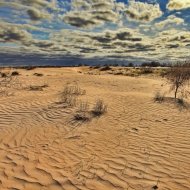
Turkmenistan is a Central Asian country located between the Caspian Sea and Uzbekistan, Kazakhstan, Afghanistan, and Iran. Most of the country is covered by the Karakum Desert, so itineraries are often planned around the capital and several popular destinations in the north and east.

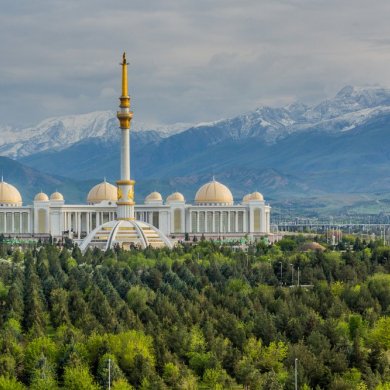
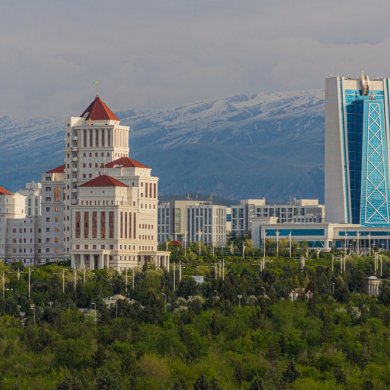
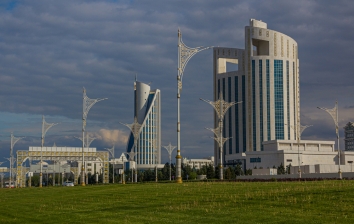
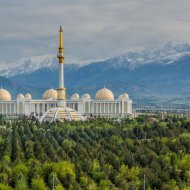
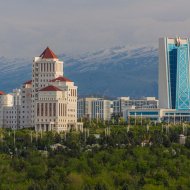
Ashgabat is listed in the Guinness Book of World Records as the city with the most white marble buildings. Turkmen horses are considered among the most beautiful and fastest in the world—they are prohibited from being eaten, and their export is strictly regulated. Turkmenistan is also the birthplace of agriculture in Central Asia.

Photos of Turkmenistan

Capital
Ashgabat
Language
Turkmen
Currency
Manat
Time zone
GMT +5
Population
7 058 000
Territory
491,200 km²

Dishes worth trying:

Pilaf — local pilaf and the signature dish of the national cuisine.

Dograma — pieces of bread, lamb, and onion, sometimes with broth added.

Gutap — а thin, crescent-shaped flatbread filled with herbs.

Chorba — а rich, hearty soup with lamb and vegetables.

Pishme — deep-fried yeast doughnuts.

Things to do in to Turkmenistan

  • To encounter nomads with camels in the Karakum Desert.
  • Visit the underground lake of Kov-Ata, with its warm mineral water.
  • Learn about the unusual funeral traditions in Nokhur.
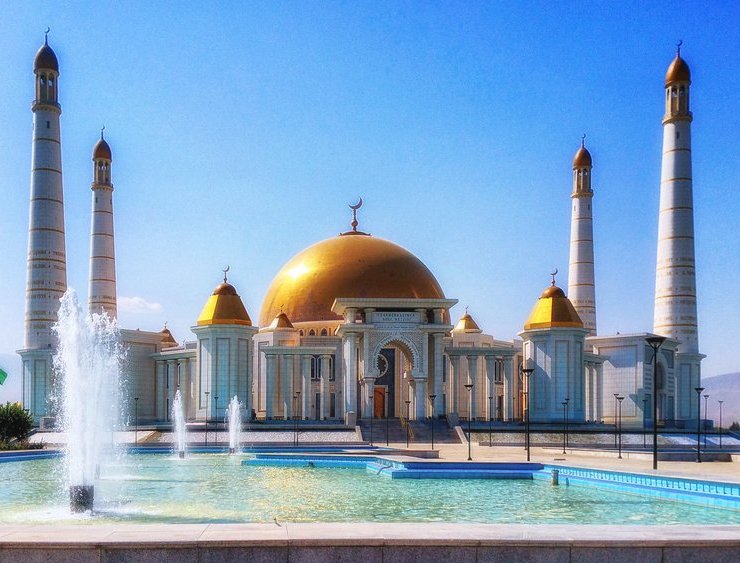
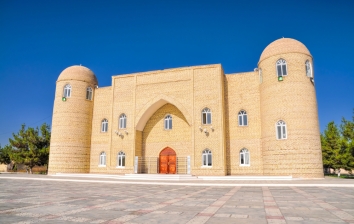
  • Visit the mosque in Kipchak—one of the largest in Central Asia.
  • See the Akhal-Teke horses, the nation’s pride.
  • See how famous Turkmen carpets are woven.

Tips

When visiting Turkmenistan, please be careful about taking photos. Photography is prohibited near government buildings, bridges, certain facilities, and some locations in Ashgabat. If you’re unsure, it’s best to ask your guide or security personnel and put your camera away until you’ve confirmed whether it’s allowed. This will help you avoid inspections, fines, and other issues.
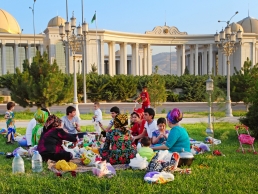
To this day, bread is considered a sacred food in Turkmenistan. It must not be thrown away, placed face down, or treated carelessly. Turkmen people keep their bread in a special cloth called a sachak. Please treat these traditions with respect, especially when you are away from major cities.
You should only plan a trip to Turkmenistan on your own if you have prior experience. Otherwise, it’s best to contact local licensed tour operators. It can be difficult to arrange transportation and accommodations on the spot. To obtain a tourist visa, you may need to provide an itinerary and proof of your tickets and reservations.

Sights

A guide to Turkmenistan is full of interesting places. All the attractions can be divided into three main groups: the modern capital with its monumental architecture, the monuments of the Silk Road, and the natural landscapes of the desert and the Caspian Sea.

Distances here are long, and some sites are located in the desert, so don’t forget to bring water, allow plenty of time for travel, and be mindful of daylight hours.

Tours to Turkmenistan

To see as many interesting places as possible, opt for organized package tours—for example, a few days in the capital combined with trips to the desert, the mountains, or the Caspian Sea. This approach has another advantage: transportation, accommodations, and the cost of your trip to Turkmenistan are all clear in advance, and you’ll be accompanied by a guide who knows the local customs. But be sure to clarify right away how much free time you’ll have and whether you can change the order of your plans without losing your permits.

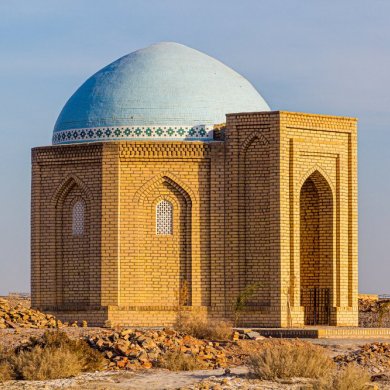
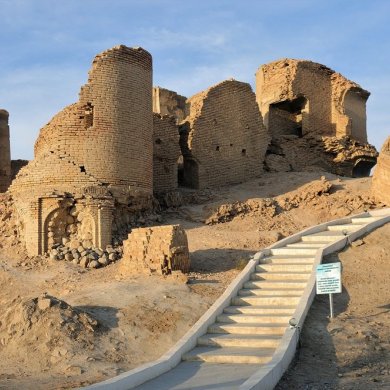
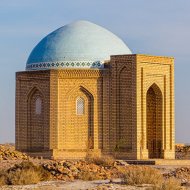
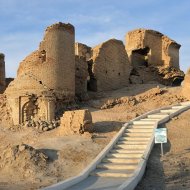
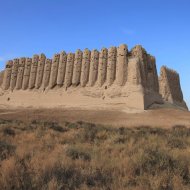
History buffs will enjoy tours of Silk Road monuments—the archaeological sites of Nisa, ancient Keneurgentch, and other fortresses and necropolises. These are full-day trips with an early departure, so comfortable shoes, water, and sun protection are essential. If you’re looking for nature, choose the Yangi-Kala canyons in the west, the foothills, and the cave regions in the east.

There is also a more resort-oriented option for traveling to Turkmenistan—the Caspian Sea coast, with the Avaza resort, offers beaches, promenades, hotels with pools and spas, as well as seasonal boat trips. Within the country, wellness stops at sulfur and mineral springs are also popular, such as in the area around the Kov-Ata underground lake. The cuisine is a treat in itself. Look for fresh flatbreads, meat dishes, local sweets, and fragrant melons at the markets.

Service is average. There are good hotels, but the selection is limited, so it’s best to book in advance. Alcohol isn’t available everywhere, and the nightlife is fairly low-key—mostly walks, tea houses, and occasional cultural events.

Where to go to Turkmenistan?

If you want to see more than just the capital, start with the port city of Turkmenbashi. It has a completely different vibe, with fresh sea air and a convenient location for day trips. To the north, Dashoguz is worth a visit—a stop on ancient caravan routes and a place to explore historic burial grounds.

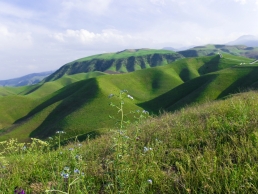
The Koytendag Mountains feature canyons and caves, and you can immerse yourself in the local culture, way of life, and crafts in the villages in the foothills. The main thing is not to forget about the long distances. Logistics significantly affect the cost of a trip to Turkmenistan, but the experiences are priceless.

When to go to Turkmenistan

Turkmenistan has a sharply continental climate—summers are very hot and dry, while winters can bring cold, windy days. The best time to visit is in the spring and fall, when days are warm but without extreme heat.

The high season usually falls in April–May and September–October. Summer trips to Turkmenistan are only suitable for those who can tolerate the heat well. Be sure to pack layers of clothing, as temperature fluctuations can be significant.

Turkmenistan in the spring

Temperatures rise rapidly in the spring, reaching 20°C and above as early as March and April. Precipitation increases, especially in the foothills. The Karakum Desert is briefly covered in greenery, making spring in Turkmenistan an ideal time for nature tours before the onset of summer.

Turkmenistan in the summer

The summer is very hot and dry. In July and August, temperatures in Ashgabat often reach 40°C, or even 42°C. It’s even hotter in the desert. Precipitation is minimal, at up to 5 mm per month. Despite the low humidity, the heat feels oppressive, so it’s best to plan excursions for early morning or evening.

Turkmenistan in the fall

In the fall, the heat gradually subsides. In September, temperatures hover around 30°C, but by October they’ve dropped to around 20°C. Precipitation remains moderate, and the weather is generally stable, with no sudden changes, making this one of the most comfortable seasons for multi-destination tours in Turkmenistan.

Turkmenistan in winter

Winter in Turkmenistan is cool and mostly dry. In Ashgabat, the average temperature ranges from 4°C to 8°C, but frosts are possible at night. Precipitation is low—up to 20–30 mm per month—because snow is rare and melts quickly. This is a quiet season for tours of historical sites and trips to the desert.

Usefulness

The tripmydream service has put together a short list of helpful tips to ensure your trip to Turkmenistan goes smoothly and without any surprises.

Visa to Turkmenistan

Citizens of the EU and the U.S. will need a visa and a letter of invitation (LOI) issued by the host organization and confirmed by the immigration service. For this reason, it is more convenient to book package tours through local travel agencies. The average cost of a visa starts at $35, and it increases with the length of the trip.

Customs & Tax Free

The rules for bringing in personal belongings are standard; you can bring in cash without any limits, but you must declare it. There is no tax-free VAT refund program for tourists. There is a duty-free shop at the airport. If you plan to buy carpets or jewelry, be sure to keep your receipts and check with customs in advance for the current export regulations.

Travel by car

A car is a convenient way to go on day trips, but be aware of checkpoints and document checks along the roads. Check with the rental company in advance regarding driver’s license and insurance requirements, as well as route restrictions, especially outside major cities. The average rental price near the capital’s airport is about 250 TMT per day.

Phrasebook for tourists

The official language is Turkmen. Russian is widely understood in cities, but English is limited to hotels and tourist services. Download an offline translation app in advance, write down addresses in the Roman alphabet and in Russian, and rely on a guide or driver if necessary.

Public transport and prices

In cities, taxis and buses are the most common modes of transportation. Be sure to agree on the fare before getting in. There are trains and domestic flights connecting different regions, and for trips outside the city, tourists usually hire a car with a driver.

Events

Turkmenistan has quite a few interesting holidays with large-scale celebrations, so be sure to check the calendar when planning your trip. There are also some truly unique events—such as Turkmen Melon Day or the Turkmen Horse Festival.

tripmydream - travel service, that helps to find compare and buy best flights and rooms worldwide with the given budget. All necessary information for travelers - is right here!