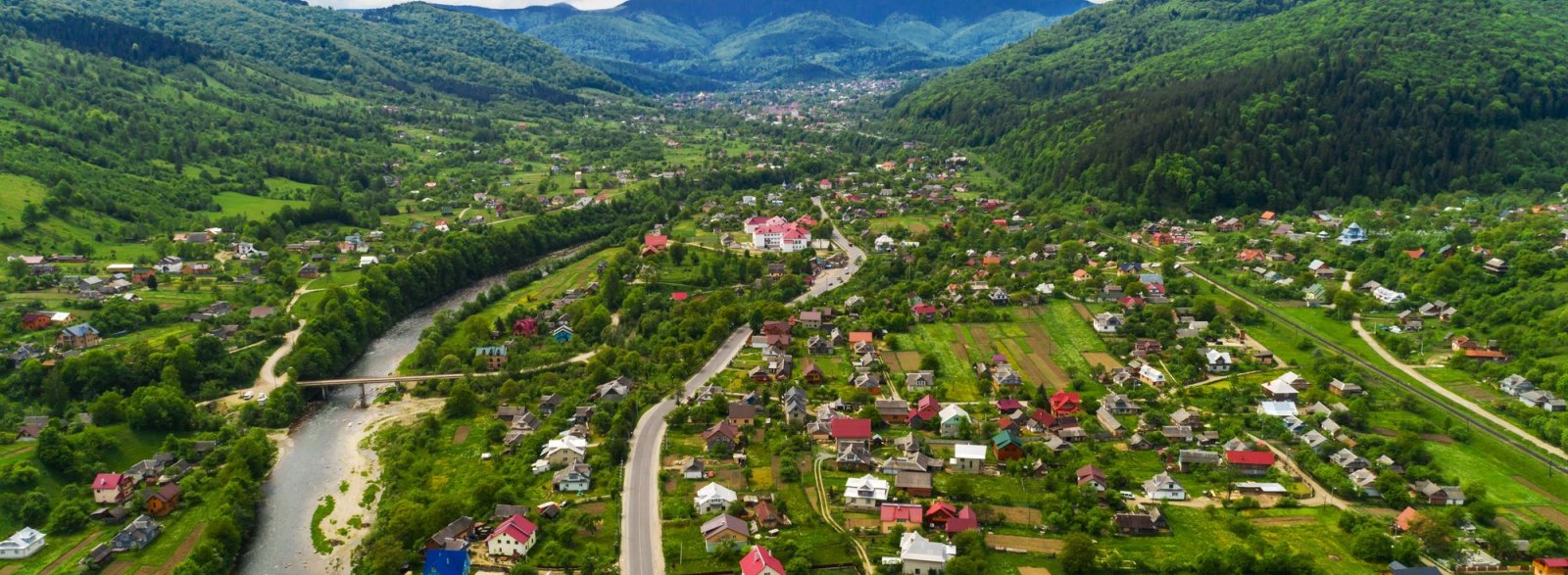
Yaremche is a small town in the Prut River valley in the Ivano-Frankivsk region. During the interwar years, it was known as the “Interlaken of the Carpathians,” and today it is considered one of the main tourist centers of the Ukrainian Carpathians. The population is about 8,000, and the resort’s history began with the construction of the railroad in 1894.
Contents
Geography: Where Is Yaremche?
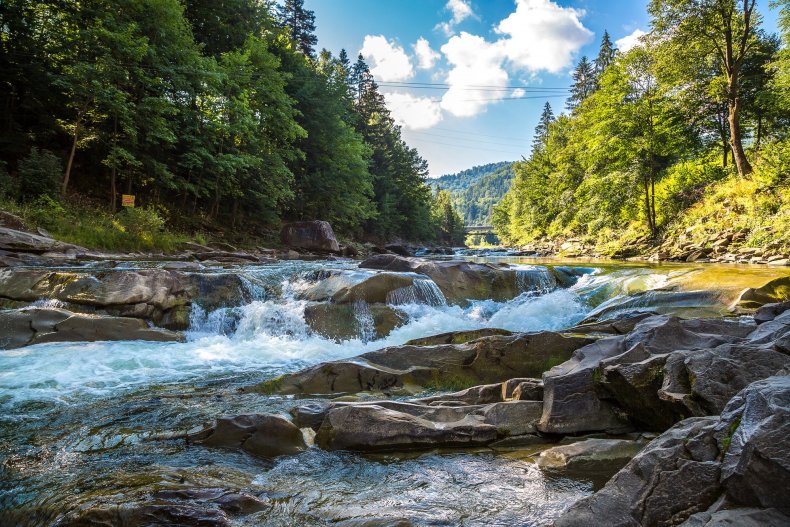
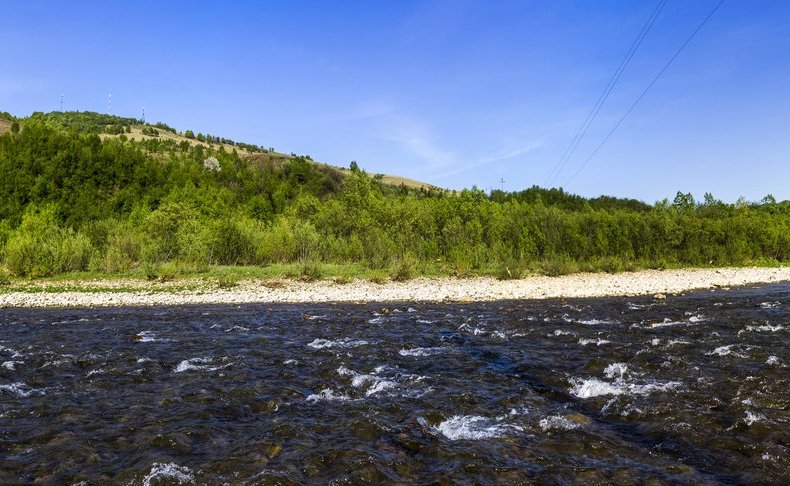
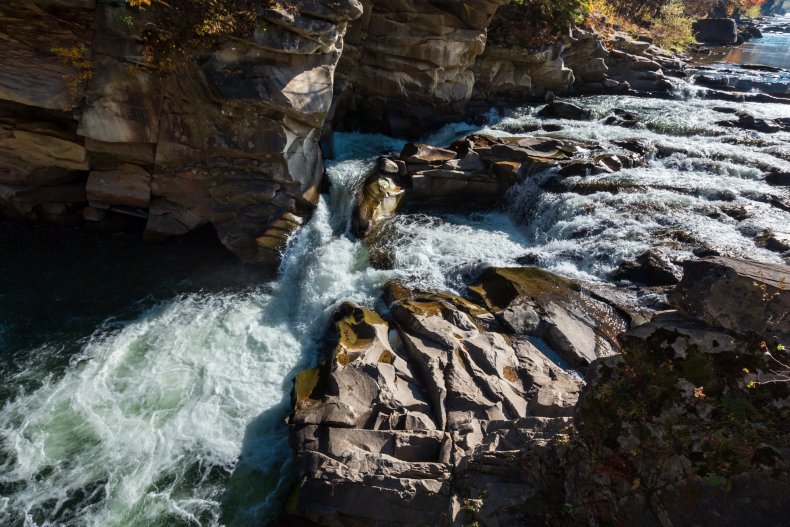
Yaremche is located in the Nadvirna District of the Ivano-Frankivsk Oblast, in the Prut River valley, surrounded by forested slopes. The Prut River itself originates on the slopes of Hoverla, Ukraine’s highest mountain, and flows through Yaremche as a turbulent mountain stream with rapids and the Proboy Waterfall. It is about 60 kilometers by road to Ivano-Frankivsk, and the nearest major ski resort, Bukovel, is located a few dozen kilometers to the south. The town’s elevation above sea level is listed in various sources as ranging from 480 to 590 meters.
The climate is mountainous: cool summers with an average July temperature of about +18 °C and snowy winters. For more details on the weather by month, see the “Weather” page.
History
The first written mention of Yaremche dates back to 1787: in the documents of the Josephine Land Survey, it is listed as a small settlement, essentially a hamlet of the villages of Dora and Yamna. According to one theory, the name Dora itself comes from the Turkic word “dora,” meaning “door,” and it is symbolic that Yaremche is called the “gateway to the Carpathians.” According to local legend, the settlement was named after a poor man named Yarema, who settled here with his family.
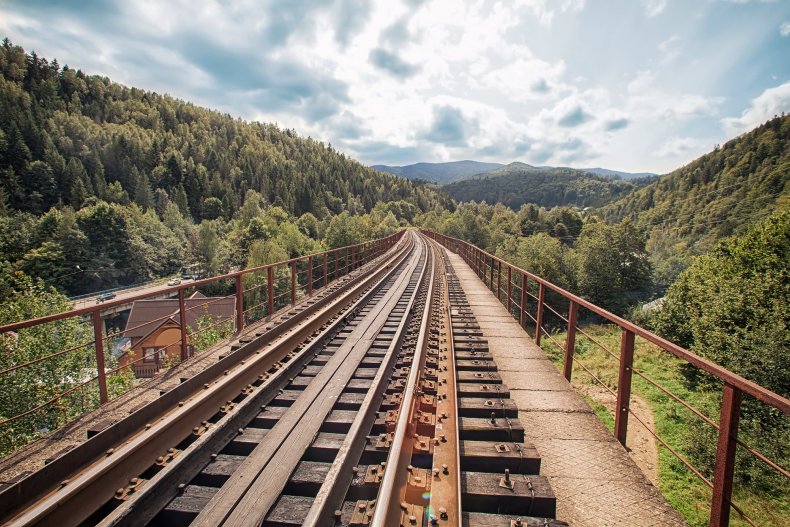
Yaremche became a separate settlement around 1895, following the construction of the Deliatyn–Voronenko railroad, which was intended to transport timber and connect Pokuttya with Transcarpathia. Tourists from other regions also used this route to reach the mountains. The town’s history as a resort dates back to 1894: within five years, about fifty villas were built here; the first newspaper was published in 1899, and a town guide was published in 1907. In 1928, the President of Poland granted Yaremche the status of a resort town.
In 1912, 2,400 people were vacationing in the town at the same time, including the heir to the Austrian throne, the future Emperor Charles I of Habsburg. During the interwar years, Yaremche and neighboring Vorokhta became well-known Polish winter resorts: in the winter, a special ten-day train called “Skiing, Dancing, Bridge” ran from Kraków. The stone railway bridge over the Prut River, built in 1894, was one of the largest in Europe: 205 meters long and 32 meters high, with a central arch spanning 65 meters. It was destroyed in 1917 and 1944, and after the war, it was rebuilt using reinforced concrete. Read more about this on the “Attractions” page.
Population and Language
According to estimates by the State Statistics Service of Ukraine, as of January 1, 2022, there were 7,907 people living in Yaremche. By comparison, in 2020 the estimate was approximately 8,044 people, meaning the city’s population remains at roughly 8,000. This figure refers to permanent residents: during peak seasons—especially during the winter holidays and summer months—there are significantly more people in the town and surrounding villages than are officially registered. For the latest data from the State Statistics Service after 2022, visit the agency’s website.
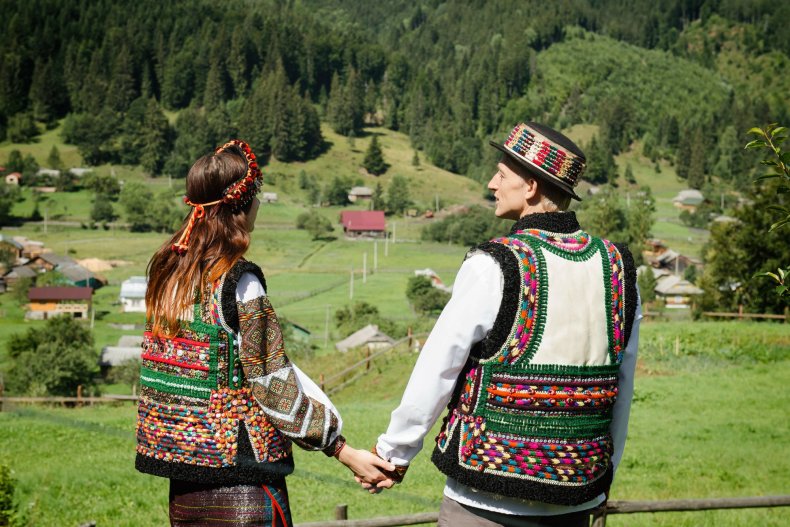
The main language spoken in the city is Ukrainian, though the Hutsul dialect is also common in the mountain villages. The Hutsuls are an ethnographic group of Ukrainians who live in the Carpathians, and it is their culture that shapes the local cuisine, music, and crafts. In hotels and tourist facilities, you can usually communicate in other languages, but a few words in Ukrainian are always appreciated.
Resort and Cultural Heritage
Yaremche cannot be called a museum town: there are no UNESCO World Heritage sites here. Three things define the city’s cultural character: its late 19th-century resort heritage, the Carpathian National Nature Park, established in 1980, and Hutsul ethnography. Several private museums have been preserved, and the Prut River and the surrounding mountains remain the town’s main attractions. The “Attractions” and “Must-See” pages provide detailed information on what to see.
Why You Should Visit Yaremche
Yaremche is perfect for those who want to get to the mountains without a long drive: it’s about 60 kilometers from Ivano-Frankivsk, and the town features a waterfall, hiking trails, and private museums. It’s a great place to start exploring the Carpathians or to spend the weekend. And if you’re looking for longer trails, Bukovel and Vorokhta are nearby.
FAQ
How many people live in Yaremche today?
About 8,000 people live in Yaremche: according to the State Statistics Service’s estimate as of January 1, 2022, there were 7,907 residents. Check the website of the State Statistics Service of Ukraine for the latest official estimate.
How has Yaremche’s population changed over the years?
The town’s population has remained around 8,000 in recent years: the estimate for 2020 was approximately 8,044 people, and as of January 1, 2022, it was 7,907. Historically, the population grew alongside the resort: in 1912, 2,400 guests were vacationing in Yaremche at the same time.
When was the town of Yaremche founded?
Yaremche was first mentioned in documents in 1787; it became an independent settlement around 1895, and the town’s history as a resort dates back to 1894, when the railroad was built.
What language is spoken in Yaremche?
Ukrainian is the main language spoken in Yaremche, while the Hutsul dialect is common in the mountain villages. You can communicate in other languages at tourist establishments, but this isn’t guaranteed everywhere.