Astana is a city best captured at night. During the “golden hour,” the snow-white domes of the Hazret Sultan Mosque glow with a warm orange light, the Baiterek Tower is reflected in the glass facades of the skyscrapers, and the fish-shaped Atyrau Bridge begins to shimmer with color. There is almost no old architecture here—all of Astana’s beauty is modern, geometrically precise, and created over the past 25 years. And this is its main feature: no other city in Central Asia boasts such a combination of forms and scales.
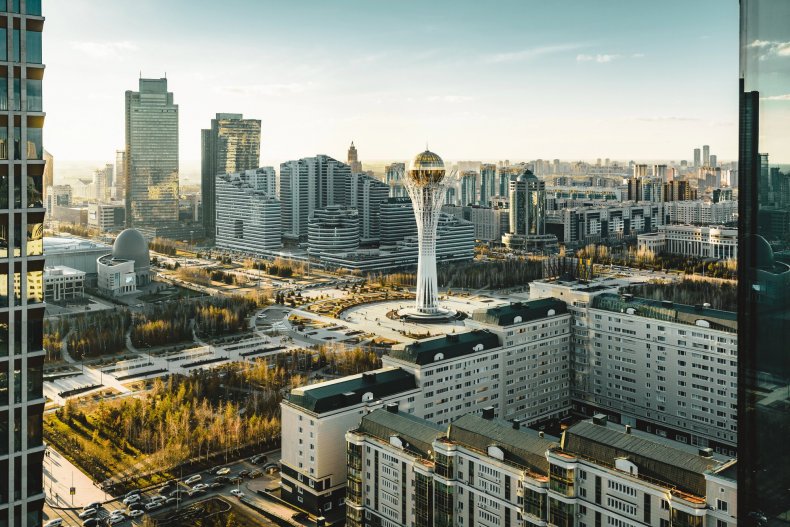
Baiterek — a golden sphere atop a 100-meter tower, the city’s best observation deck. It’s most beautiful an hour before sunset.
Hazret Sultan Mosque — a snow-white palace with 77-meter minarets. At sunset, it offers one of the best views of the city.
Palace of Peace and Harmony (Pyramid) — the perfect geometry of the pyramid against the sky. The observation deck offers a view of the entire city.
The “Atyrau” Bridge is a pedestrian bridge shaped like a fish that shimmers with all colors at night. It is the city’s best nighttime attraction.
Nurzhol Boulevard in the evening —an illuminated “road of light” between Baiterek and Ak Orda. Best viewed 20 minutes after sunset.
Khan Shatyr — a giant glass tent 150 meters high that resembles a crystal when illuminated at night.
Nur Alem (EXPO) is the largest spherical building in the world. It’s best to photograph it from the square in the morning.
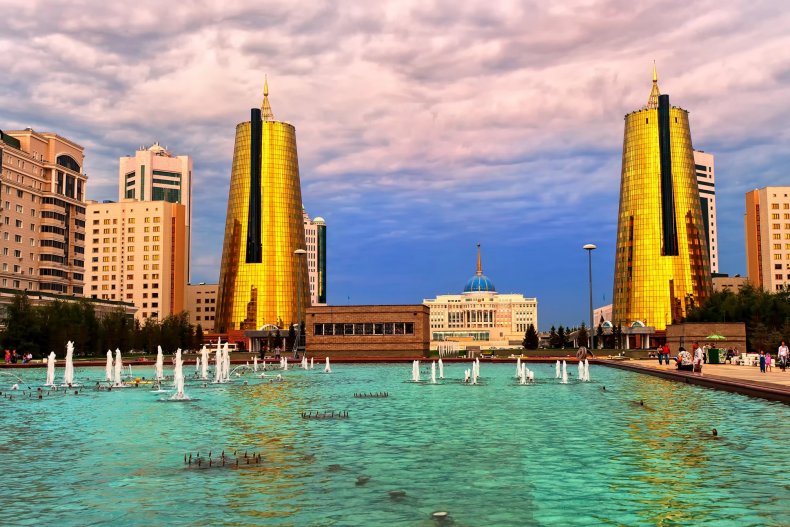
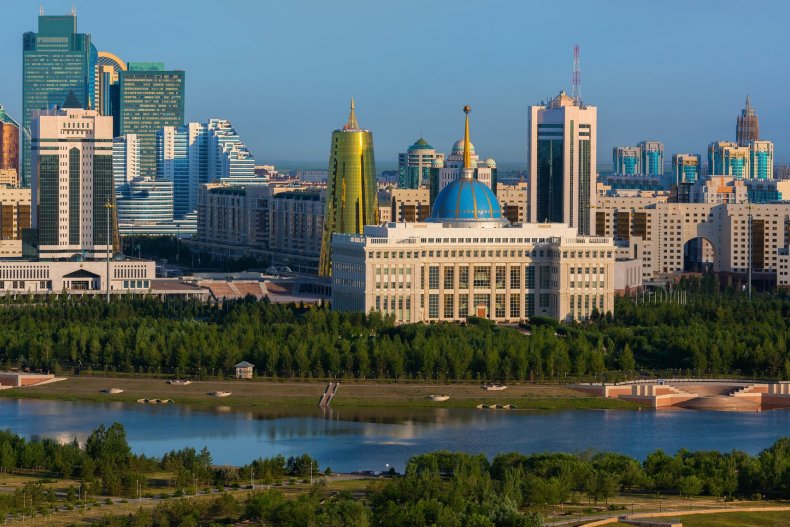
Ak Orda — a snow-white presidential residence with a golden dome, most beautiful at sunset.
Esil Embankment — the reflection of skyscrapers in the water. The best shots are in the early morning when the water is calm.
Lovers’ Park — a green oasis near Khan Shatyr with fountains and a sculpture. Best in May and September.
A detailed description of each location is provided in the sections below.
Astana’s Impressive Architecture
Architecture is Astana’s defining feature. The entire left bank was built from scratch after 1997 based on designs by world-renowned architects, so every building here is an architectural statement. Nowhere else in Central Asia is there such a concentration of bold forms.
Baiterek—the golden sphere atop the Tower of Life
What makes it beautiful: A 100-meter-tall tower of metal and glass, crowned by a golden sphere 22 meters in diameter at a height of 97 meters. The number 97 represents the year the capital was moved. From the outside, Baiterek looks like a tree with a nest at the top: the slender “branches” of the metal structure radiate downward from the sphere. In the evening, the lighting turns on both the interior and exterior lights—the sphere literally glows.
Best time to visit: 30–40 minutes before sunset—the golden light reflects off the glass walls of the nearby skyscrapers. The observation deck inside (2,000 tenge) is open until 9:00 PM. In winter, when it gets dark early, the lighting is especially striking.
Photo tip: Don’t shoot Baiterek head-on; instead, take the shot slightly from the side—from the corner of Nurzhol Boulevard. This way, the perspective of the alley and Ak Orda in the background will be captured in the frame. Another vantage point is from the opposite bank of the Esil River: the tower’s reflection in the water early in the morning.
Hazret Sultan Mosque — Central Asia’s Snow-White Palace
What makes it beautiful: Kazakhstan’s largest mosque (48 Tawelsizdik Ave.) is a snow-white architectural ensemble featuring four 77-meter minarets and a main dome standing 51 meters tall. The facades are adorned with Kazakh ornaments and Arabic calligraphy in soft tones. The “floating palace” effect comes from the combination of white marble, light arches, and vertically soaring minarets. The site covers 13 hectares, so the mosque looks monumental but not overwhelming.
Best time to visit: sunset—when the sun sets behind the left bank, the mosque’s facade is bathed in warm golden light. Early morning (7:00–8:00 a.m.)—the mosque is evenly lit, the shadows are soft, and there are no tourists yet. Open 24 hours a day.
Photo tip: the best shot is from the far end of the square in front of the mosque: all four minarets and the dome fit entirely into the frame. The reflection in the symmetrical puddles after rain makes for an exceptional shot. Tourists are allowed inside: dress code (modest clothing; women must wear a headscarf).
Palace of Peace and Harmony — a perfect pyramid
What makes it beautiful: a perfect pyramid 62 meters tall (1 Beibitshilik St.), designed by British architect Norman Foster. The sides are clad in glass with a triangular pattern—the pyramid doesn’t look “stone,” it appears slightly transparent. At night, it is illuminated from the inside in a cool blue light.
Best time: early twilight, when it’s still light out but the sky is already blue—the pyramid stands out clearly against the backdrop. Accessible 24/7 from the outside.
Photo tip: shoot from a low angle—this makes the pyramid appear even taller and more monumental. Don’t shoot at noon—the side-lit sun washes out the shadows, and the shape is lost. The best time is on a cloudy day: the even light highlights the texture of the glass facets.
Khan Shatyr — the tent-skyscraper
What makes it beautiful: a shopping center shaped like a giant tent, 150 meters high (1 Nurzhol Boulevard)—designed by architect Norman Foster, it is a massive glass yurt. The translucent shell made of a special ETFE material lets diffused light through, so Khan Shatyr looks luminous in any weather. At night, built-in lighting makes it resemble a crystal.
Best time to visit: in the evening after sunset—the lighting turns on and the building literally glows in the dark. Take photos from a distance along the waterfront—that way you can see the entire silhouette.
Photo tip: shoot from a low angle at the corner of the boulevard—the tent seems to soar into the sky. On a winter evening in the frosty air, the building “breathes” steam—a unique effect.
Ak Orda — a golden dome against a white backdrop
What makes it beautiful: the presidential residence at the end of Nurzhol Boulevard—a stately snow-white structure with a large golden dome. Strict symmetry, flags along the perimeter, and a wide plaza in front of the building create the image of “imperial” architecture. Ak Orda is visible from the boulevard—it marks the end of the city’s main axis.
Best time: sunset—the sun bathes the facade in warm golden light, and the dome literally glows. Visitors aren’t allowed inside, but the exterior view is enough.
Photo tip: the best angle is from the center of Nurzhol Boulevard, so that the entire Baiterek and Ak Orda are in the same frame. Shoot along the central axis, keeping the horizon perfectly horizontal.
Astana Opera — a classic in a modern city
Why it’s beautiful: The Opera and Ballet Theater (1 Kunaev St.) is the only building in the new city designed in the classical style. Against the backdrop of glass skyscrapers, it stands out as a deliberate contrast: white columns, arched windows, and traditional symmetry. In the evening, the facade is beautifully illuminated.
Best time: sunset—professional photographers specifically highlight this location for its unique evening lighting. The square in front of the theater empties out after evening performances (~10:00 PM)—you can take photos without people in the frame.
Photo tip: Stand opposite the entrance, slightly to the side, so the columns are in perspective within the frame. A contrasting sky (cloudy or during the blue hour) highlights the whiteness of the facade better than a clear midday sky.
Panoramas and Viewpoints
Astana is a flat city in the steppe. There are no natural vantage points here—but several man-made observation decks offer an unusual view of the futuristic skyline.
The Baiterek Observation Deck—the city’s main panoramic viewpoint
What you can see: From a height of 97 meters, the entire axis of Nurzhol Boulevard stretches from Ak Orda to Khan Shatyr. To the south lies the dome of Hazret Sultan, to the north the old city, and on the horizon the steppe. On a clear day, visibility extends for tens of kilometers. Admission: 2,000 tenge; open daily until 9:00 PM. Best time to visit: one hour before sunset—you’ll have time to see both the sunset and the city lights come on. Photo tip: The observation deck is circular—shoot in different directions. The west side in the sunset light offers the best shot. When shooting through the glass, use a polarizing filter or press your lens against the glass.
Nur Alem (EXPO) Observation Deck — a bird’s-eye view of the EXPO district
What you’ll see: from the top (8th) level of the sphere—the EXPO grounds, the city skyline against the backdrop of the steppe. Unique angle: looking down, the EXPO town with its pavilions is clearly visible. Admission: from 1,500 tenge; check the schedule at qazexpocongress.kz. Best time: morning—fewer people, cleaner air. Photo tip: a less well-known spot than Baiterek—and practically no tourists. It’s perfect for drone-style shots.
Esil Embankment — a panoramic view of the skyline at water level
What you’ll see: from the right bank promenade, the entire left bank with its skyscrapers and domes is reflected in the river. Early in the morning, the water is calm—a mirror-like reflection. Access: free, 24/7. Best time: 6:00–7:30 a.m.—calm water, soft light, no people. Photo tip: long exposure on a tripod + reflection = an almost symmetrical “city in reverse” shot.
Parks and Green Spaces
Astana is a young city, essentially a steppe city, so every green space here is the result of deliberate planning. The parks are small but well-maintained and full of character.
Lovers’ Park—a green oasis near Khan Shatyr
What makes it beautiful: 14 hectares of greenery on the left bank of the Esil River, next to Khan Shatyr. Artificial streams, fountains, and bridges over the water. In the center stands the sculpture “Your Love Gives Me Wings,” popular with newlyweds. In the summer, wild hares visit—a unique touch for an urban park. Best time to visit: May (the first greenery, tulips in the flower beds) and September (the warm hues of the foliage). Photo tip: Come in the morning on a weekday—the park is empty, so you can photograph the sculpture without people. In the evening, the fountain reflects beautiful light.
Botanical Garden — Tropical Plants in the Steppe
What makes it beautiful: a research park with greenhouses featuring tropical plants, cacti, and succulents. Outside, there are paths, a fountain, and a pond with koi. A place quite unexpected for Astana: beyond the gates—the tropics. Best season: May–September, when everything is in bloom. The greenhouse is open year-round. Photo tip: the fountain in the center of the park + blooming flower beds = a perfect summer shot. You can rent bikes at the entrance—it takes about 40 minutes to cycle around the entire garden.
“Starry Sky” Park — an illuminated tunnel
What makes it beautiful: a park on the Esil Embankment with a central walkway decorated with lights that mimic the night sky. The effect only works in the dark—this is one of the best nighttime photo spots in Astana. Best time: after 9:00 PM, when it’s completely dark. Photo tip: shoot at the end of the tunnel with a wide-angle lens—the light stretches into the distance. Use a moderate ISO; a tripod will give the best results.
Beautiful places for a walk
Nurzhol Boulevard—the city’s main thoroughfare
What makes it beautiful: The 2-kilometer pedestrian promenade between Khan Shatyr and Ak Orda is the very “postcard” image of Astana. On both sides are skyscrapers with unique architecture, fountains, flower beds, and sculptures. In the evening, the area is fully illuminated: every building, fountain, and tree is lit up. This is where most of the city’s commercial photos are taken. Best time: 15–20 minutes after sunset—the “blue hour,” when the sky is still deep blue and the lights are already on. This is the most beautiful view of the boulevard. Photo tip: shoot along the central axis toward Baiterek or Ak Orda—the perspective works perfectly. Long exposure = trails of moving lights in the frame.
Independence Square and the “Kazak Eli” Monument
What makes it beautiful: a snow-white column topped by a sculpture of the mythical bird Samruk, standing about 90 meters tall in the center of a large square. Surrounding it is monumental architecture: the Palace of Independence and the Hazret Sultan Mosque on the horizon. This is the city’s largest open space. Best time to visit: early morning—the shadows from the stele are long, there’s no one around, and the light is soft. Photo tip: shoot the stele from the bottom up with a wide-angle lens—it stretches into the sky. The Samruk bird is best seen in side lighting—early in the morning or in the evening.
The Embankment and Waterfront
The Esil River Embankment—Reflections and the Horizon
Why it’s beautiful: The Esil River divides the old and new cities, and it is from its banks that the most complete view of Astana’s left-bank horizon opens up—with skyscrapers, Baiterek, Khan Shatyr, and the mosque. The air above the river creates a light haze that lends the panorama a special depth on a sunny day. Best time: early morning (6:00–7:30 a.m.)—calm water, mirror-like reflections. Also in the evening—the city lights reflect in the river. Photo tip: tripod + 2–4 sec exposure + calm water = perfect reflection. The best shooting spot is near the “Atyrau” Bridge on the right bank.
Atyrau Bridge — a fish leaping
What makes it beautiful: the pedestrian bridge (2018) is shaped like a fish leaping out of the water. The metal “scales” let daylight through, creating a pattern of shadows inside. At night, the bridge is illuminated in blue, green, and purple—gradually changing colors. This is one of the few landmarks in Astana that is equally beautiful both day and night. Best time: at night (from 10:00 PM)—the lighting is at its fullest, and the reflection in the water doubles the effect. During the day—around 10:00 AM, when the sun shines through and the scales cast beautiful shadows. Photo tip: from the water (if a pleasure boat is available during the summer) or from the embankment—the silhouette of a fish against the sky. At night, shoot from the opposite bank of the river—both the bridge and its reflection will be in the frame.
The Best Spots for Sunset in Astana
Astana stands in the steppe—the horizon is wide, the sky is high. Sunsets here are long and rich in color, especially in summer and early fall.
Top 5 sunset spots (in order of spectacularness):
Baiterek Tower (until 9:00 PM) —97 meters high, unobstructed view to the west. Sunset sky + silhouettes of skyscrapers. The best option of all, if you manage to buy a ticket before closing time.
Esil Embankment (near the “Atyrau” Bridge) — the sun sets behind the left bank, illuminating the building facades. The reflection in the river doubles the color.
The square near the Hazret Sultan Mosque — the mosque’s white facade bathed in golden sunset light — one of the most beautiful views in Astana. Stand on the square side facing the mosque.
Nurzhol Boulevard near Ak Orda — the golden dome of Ak Orda literally glows in the sunset rays. Shoot from the middle of the boulevard.
Independence Square —a wide open space with an unobstructed view of the sunset. The “Kazak Eli” monument silhouetted against the orange sky.
Astana’s Seasonal Beauty
Astana has one of the most contrasting climatic ranges among the world’s capitals: from −40°C in winter to +35°C in summer. And each season creates a fundamentally different picture.
Season
What the city looks like
Best for photos
May–June
The first signs of greenery, blooming flower beds, and long sunset light. The fountains are running.
Parks, the waterfront, and the flower-lined boulevard. The best season for photographing the city.
July–August
Bright sun, 30–35°C, long days. Sunset at 9:00 p.m. or later.
Architecture in harsh light, night shots. Fountains and lighting.
September
Golden autumn. The trees along the boulevard and in the parks turn yellow, soft lighting.
The best month for autumn shots. Golden foliage + architecture.
October–November
Leaves are falling, colors are fading. First frosts, morning fog.
Misty morning shots by the waterfront, atmospheric.
December–February
Snow on the domes and minarets, frosty air with crystal clarity.
The Hazret Sultan Mosque in the snow—a surreal scene. Baiterek on a frosty evening.
September is the best month for a photographer. Golden autumn + soft light + no heat. The foliage on the boulevards and in the parks is yellow and orange, with temperatures of +15–20°C. May is the second most beautiful: the city is in spring, in bloom, and the fountains have just started running.
Where to take photos in Astana: the best spots
Location
What’s in the frame
Best time
Pro tip
Baiterek Observation Deck
The city’s main axis: Ak Orda, the boulevard, skyscrapers, the mosque
40 minutes before sunset
Press the lens against the glass or use a polarizing filter
Hazret Sultan Mosque from the outside
White domes and minarets, the square, ornamentation
Sunset or early morning
After rain—reflections in the puddles on the square
Nurzhol Boulevard (center)
View of the alley + Baiterek or Ak Orda
"Blue hour" (20 minutes after sunset)
Shoot strictly along the center axis for symmetry
"Atyrau" Bridge (from the shore)
Silhouette of a fish + reflection + waterfront
Night from 10:00 PM
Shoot from the farthest point on the shore—all the fish will fit in the frame
Esil Embankment (right bank)
Horizon of the left bank + reflection in the water
Sunrise 6:00–7:30 AM
Tripod + calm water = a perfect mirror
The square near the “Kazak Eli” stele
Column with the Samruk bird + sunset sky
Sunset / early morning
Shoot from the bottom up with a wide-angle lens
"Starry Sky" Park
Illuminated tunnel, nighttime atmosphere
After 9:00 PM
Shoot at the end of the tunnel with a view of the lights in the distance
In front of Astana Opera
Classic facade with columns + evening lighting
Sunset
To the side of the entrance, so the columns create perspective
Common mistakes when looking for beautiful spots in Astana
Photographing Baiterek at 12:00 on a clear day. At noon, the harsh vertical sun eliminates all shadows—the tower looks flat and boring. Better times are an hour before sunset or early in the morning. Evening lighting is a whole other story.
Photographing the Hazret Sultan Mosque straight on and at noon. The white facade “blows out” on a sunny midday and loses the details of its ornamentation. The best lighting is in the morning or at sunset, when shadows and color appear on the white surface.
Look for beautiful old streets and neighborhoods. Astana is a completely new city. There are practically no historic buildings. Those looking for Prague- or Tbilisi-style alleyways will be disappointed. Astana’s beauty lies in its scale and futurism, not in the details of the past.
Visit the Atyrau Bridge during the day to see the lighting. During the day, the bridge looks like a metal structure—nothing special. All the magic lies in the nighttime lighting, which begins after 10:00 p.m.
Wait for the “golden hour” at Baiterek, but don’t miscalculate the observation deck’s hours. The observation deck closes at 9:00 PM. In the summer, the golden hour begins around 8:30–9:00 PM—it’s very easy to miss the sunset from above. Arrive 40 minutes before the estimated sunset and check the time using an app like Sun Surveyor.
Tips for photography travelers in Astana
Golden hour in Astana (May–September): sunset around 9:00–9:30 PM. Sunrise around 5:30–6:00 AM. Plan your route so you arrive at the key location 30 minutes beforehand. Check the exact time on goldenhourphotography.com or Sun Surveyor.
The blue hour is the most underrated moment. About 15–25 minutes after sunset, the sky turns deep blue, and the city lights are already on. This is 10–15 minutes of perfect lighting for cityscapes. Don’t miss it.
After it rains—be sure to go out. The wet square in front of Hazret Sultan and the puddles on the boulevard create reflections that turn a standard shot into something special.
In winter—special conditions for photography: the frost makes the air crystal clear. A mosque in the snow is a rare and very beautiful shot. But dress warmly—at −25°C, a smartphone battery drains in 15 minutes.
Avoid weekends near the fountain show and the Baiterek observation deck. There are lines on Saturdays and Sundays. On weekdays after 7:00 p.m., it’s much less crowded.
Instagram geotags: “Astana,” “Nur-Sultan,” “Baiterek,” “Khan Shatyr”—search by location for the best angles from local photographers. The hashtag #amazingastana features several hundred professional shots of the city.
Frequently asked questions about beautiful places in Astana
What are the most beautiful places in Astana? The top three: the Baiterek Tower (best panorama and evening lighting), the Hazret Sultan Mosque (snow-white architecture with minarets, especially at sunset), and the “Atyrau” Bridge (nighttime illumination). For a stroll—Nurzhol Boulevard during the “blue hour” after sunset.
Where is the best view of Astana? The Baiterek observation deck (97 m, admission 2,000 tenge, open until 9:00 PM) offers the best panoramic view of the city, with the entire boulevard axis and the horizon in view. Another option is the Esil Embankment, where the horizon is reflected in the water, especially in the early morning.
When is the best time to visit Astana for beautiful views? September—golden autumn, soft light, no heat. May—the first greenery and blooms. For winter snowy shots—December–January, but with temperatures as low as −30°C. The longest sunset light—June–July.
Where to take photos in Astana? Top 3 spots: the center of Nurzhol Boulevard with a view of Baiterek (best during “blue hour”), the square in front of the Hazret Sultan Mosque (best at sunset), and the Atyrau Bridge from the embankment (best at night). A lesser-known spot: the “Starry Sky” tunnel in the park near Esily—a nighttime shot without tourists.
What are some beautiful streets in Astana? Astana is a new city without historic alleys. The most photogenic routes: Nurzhol Boulevard (a pedestrian axis with architecture), the Esil Embankment (2 km along the river), and the EXPO grounds (futuristic architecture). There are no old neighborhoods here in the European sense.
Where is the best sunset in Astana? The Baiterek Tower observation deck—if you make it there by 9:00 PM (97 m high, unobstructed view to the west). If not—the square near the Hazret Sultan Mosque: the white facade bathed in the golden glow of sunset is one of the city’s best photo opportunities. A third option is the Esil Embankment from the right bank.
Are there any beautiful places in Astana that tourists don’t visit? Yes. Starry Sky Park with its illuminated tunnel on the Esil River embankment is practically free of tourists. The Botanical Garden early in the morning is quiet and beautiful. The square near the “Kazak Eli” stele is empty early on weekday mornings, with long shadows. Also: the view from the right bank of the Esil River across from the “Atyrau” Bridge—there’s almost no one there, and the panorama is excellent.
![The Khan Shatyr Building in Astana [EDITORIAL]](https://tripmydream.cc/travelhub/travel/blocks/26/1338/block_261338.jpg?v1)
![Nur-Sultan’s Autumn Skyline with Glass Skyscrapers [EDITORIAL]](https://tripmydream.cc/travelhub/travel/blocks/26/1342/block_261342.jpg?v1)