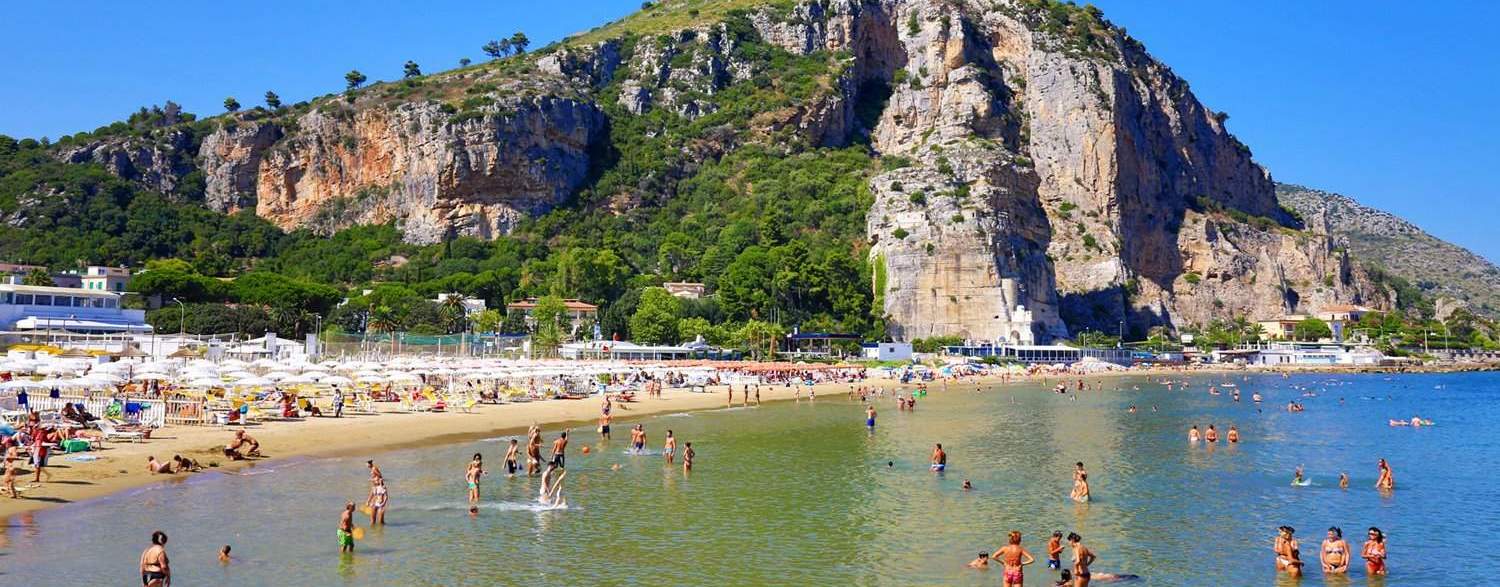
The rainy seasons continue in Terracina from November to April. During this time, the weather is cool, although there are rarely any freezing temperatures. Naturally, when the rainy seasons begin in Terracina and along the entire coast, the number of tourists decreases.
The tourist season traditionally lasts from May to September. In October, fewer people want to swim in the sea as it starts to get slightly cooler. However, those who are more interested in exploring the attractions of the surrounding areas can stay until November. In June and July, there is practically no rainfall, and the air temperature rises to around 30°C.
In late autumn, the sky is often covered with low clouds, and the waves of the Tyrrhenian Sea can reach up to two meters. At other times, the sea is calm, which is a distinctive feature of the beaches along the Coast of Odysseus.
The Tyrrhenian Sea does not experience strong tides, so there is no need to worry. However, it is important to be cautious of unnoticed coastal currents, as even in shallow water, they can be dangerous. If tides and currents are significant enough to affect beachgoers, warning signs are usually displayed. However, you are unlikely to notice these changes.
In the middle of summer, tides usually begin around noon, and their height can reach half a meter, so you may need to move back from the water's edge by one and a half to two meters.

Vegetation and Wildlife of Terracina
The vegetation in Terracina showcases the evergreen diversity of the Italian coast. You can find myrtle trees, palm trees, shrubs, and flowering plants that bloom year-round. Exotic flowers are also cultivated, and citrus trees, eucalyptus, olive trees, and conifers can be seen.
The wildlife in Terracina and its surroundings is not very diverse due to human impact. Local shepherds raise sheep and goats. The bird population includes swallows, thrushes, goldfinches, and numerous seabirds. Predatory falcons can also be spotted.
Regarding marine fauna, tuna, flounder, sardines, mullets, and cod have commercial importance. The coast of Italy is free from dangerous fish and jellyfish.


