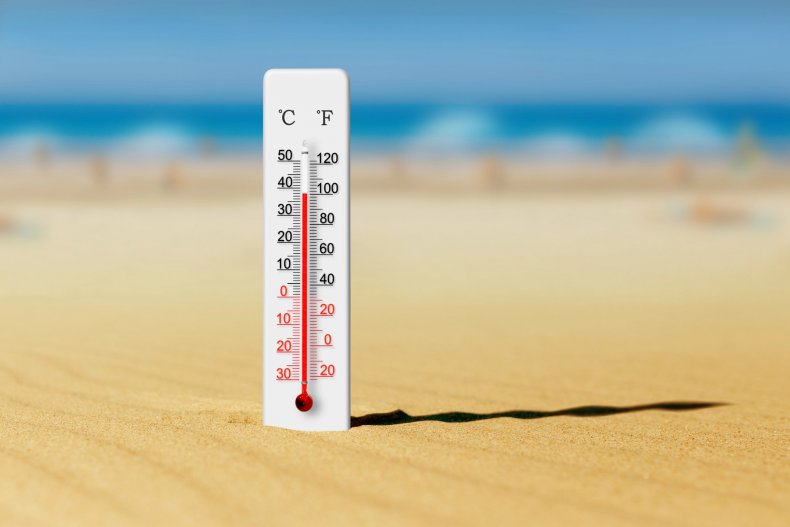
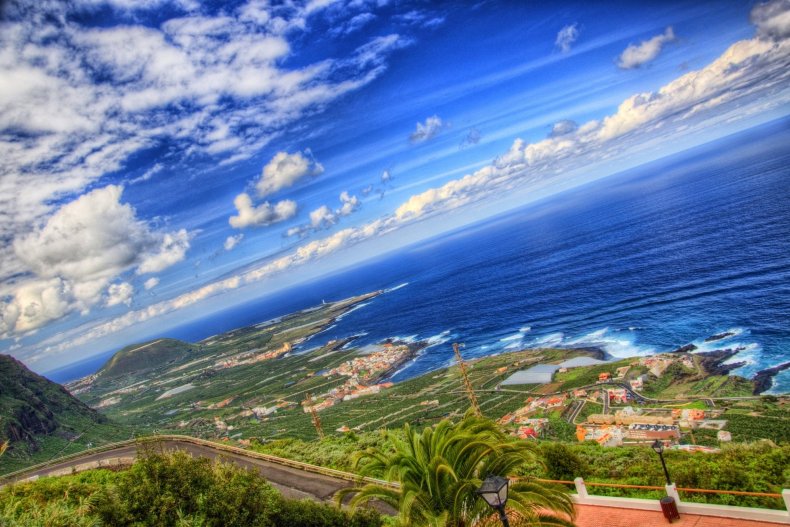
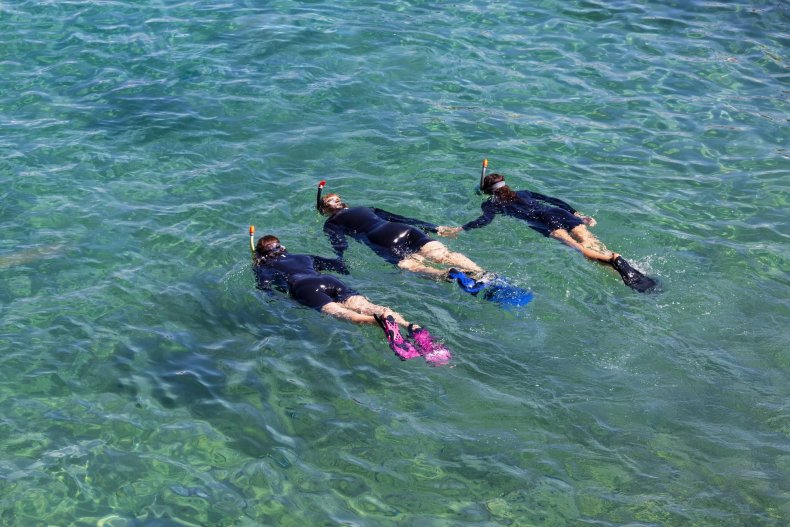
Tenerife is known as the “Island of Eternal Spring”—and that applies not only to the air but also to the Atlantic Ocean. The water here is warm year-round, making the island one of the few European destinations where you can swim in January. The Canary Current keeps the water at a comfortable temperature even during the “coldest” months, and in the summer, the ocean warms up to 23–24°C.
Contents
- Water Temperature by Month
- Seasonality: When Is the Best Time to Swim
- The North and South of the Island: What’s the Difference
- Best Beaches for Swimming
- Do You Need a Wetsuit?
- Water Quality and Safety
- FAQ
Seasonality: When Is the Best Time to Swim in Tenerife
Winter (December–February): The “cold” season
Water temperature: +18–20°C—by Tenerife standards, this is “cold,” although many visitors from colder climates happily jump into the sea at this time of year. Europeans from Scandinavia and Germany, who are used to +14–16°C back home, swim without any problems. A wetsuit or thermal shirt is recommended for extended swims. On the other hand, the beaches are significantly less crowded, and accommodation prices are lower.
Spring (March–May): The water warms up slowly
March and April are a transitional period. The water is +18–19°C, and the air warms up to +22°C. Swimming is pleasant, though a fresh Atlantic breeze sometimes blows. By May, the water reaches +20°C, and the swimming season can be considered open. Spring is a wonderful time for active tourism: nature is turning green, there are few tourists, and prices are reasonable.
Summer (June–August): A Beach Paradise
July–August is the peak of the tourist season. The water is +22–23°C, and the air reaches up to +30°C in the southern regions. No wetsuits are needed; you can swim for hours. Important: It is during the summer that the southern part of the island is swept by the dry, hot calima wind—hot air from the Sahara that raises the air temperature to +35–38°C. On such days, the sea feels especially pleasant and refreshing.
Fall (September–November): The Golden Season
September and October are perhaps the best time to visit Tenerife. The water is at its warmest (+22–23°C), the sun is gentler than in August, there are fewer tourists, and prices are moderate. “Velvet” October–November is a favorite time for families with children and people who appreciate a peaceful vacation.
The North and South of the Island: What's the Difference When It Comes to Swimming
Southern Tenerife
Playa de las Américas, Los Cristianos, Costa Adeje—it’s dry and sunny here, with over 300 days of sunshine a year. The sea is calmer here: the coast is sheltered from the prevailing Atlantic winds by mountain ranges. That’s why most of the tourist beaches are concentrated in the south. The water temperature here is slightly higher, and there’s minimal swell.
Northern Tenerife
Puerto de la Cruz, Icod de los Vinos—it’s more humid and greener here. The ocean in the north is rougher: stronger waves and a strong Atlantic breeze. It’s perfect for surfing and windsurfing. For a peaceful swim with children, it’s best to choose sheltered coves. The water in the north is 1–2°C cooler than in the south.
The Best Beaches in Tenerife for Swimming
Las Vistas (Los Cristianos / Playa de las Américas)
One of the island’s best beaches. Golden imported sand, calm waters, and an easy entry into the water. Perfect for children. Blue Flag certification. About 1 km long.
Playa del Duque (Costa Adeje)
An elegant beach in an area with five-star hotels. Fine sand, well-maintained facilities, and calm waters. One of the island’s most photogenic beaches.
Playa de la Arena (Puerto de Santiago)
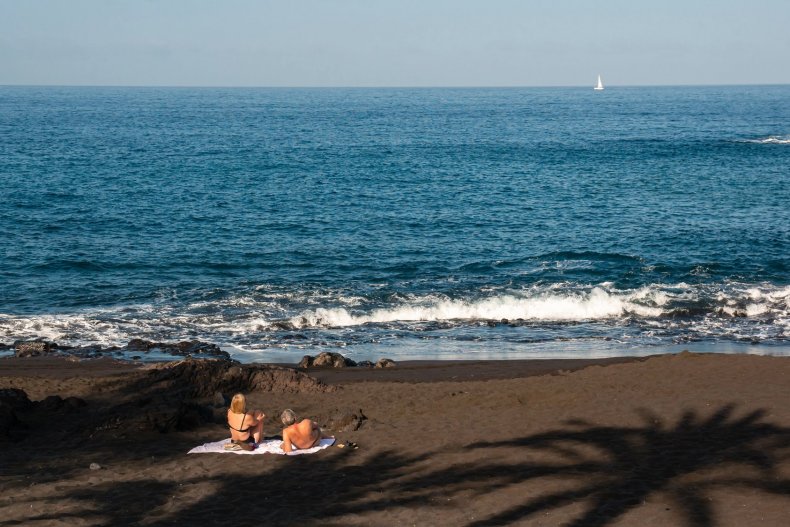
A famous black volcanic beach. The dark sand isn’t a sign of poor quality but rather a geological feature of the island. The water is crystal clear, and the facilities are good. It impresses with its unique atmosphere.
Playa de las Teresitas (Santa Cruz de Tenerife)
The only beach with light, sugar-like sand near the island’s capital. A sheltered cove with an artificial breakwater—the water here is always calm, like a lake. It’s popular with locals. You can get there by bus from Santa Cruz.
Water Quality and Safety
Tenerife takes pride in the quality of its waters. Many of the island’s beaches have been awarded the EU Blue Flag (Bandera Azul). Look for the flags on the beach:
- Green flag — it’s safe to swim
- Yellow flag — caution, moderate waves or currents
- Red flag — swimming prohibited (storm, strong currents)
FAQ
Can you swim in Tenerife in the winter?
Yes, absolutely. The water temperature is 18–20°C in January–February—a perfectly comfortable temperature for most Russians.
In which month is the water in Tenerife the warmest?
In August and September—+23°C.
How do the beaches in the south and north of Tenerife differ?
In the south, you’ll find calm seas, sandy beaches, a dry, sunny climate, and plenty of tourist amenities. In the north, the ocean is rougher with waves, and the beaches are dark sand and pebble, surrounded by lush greenery, with fewer tourists.